
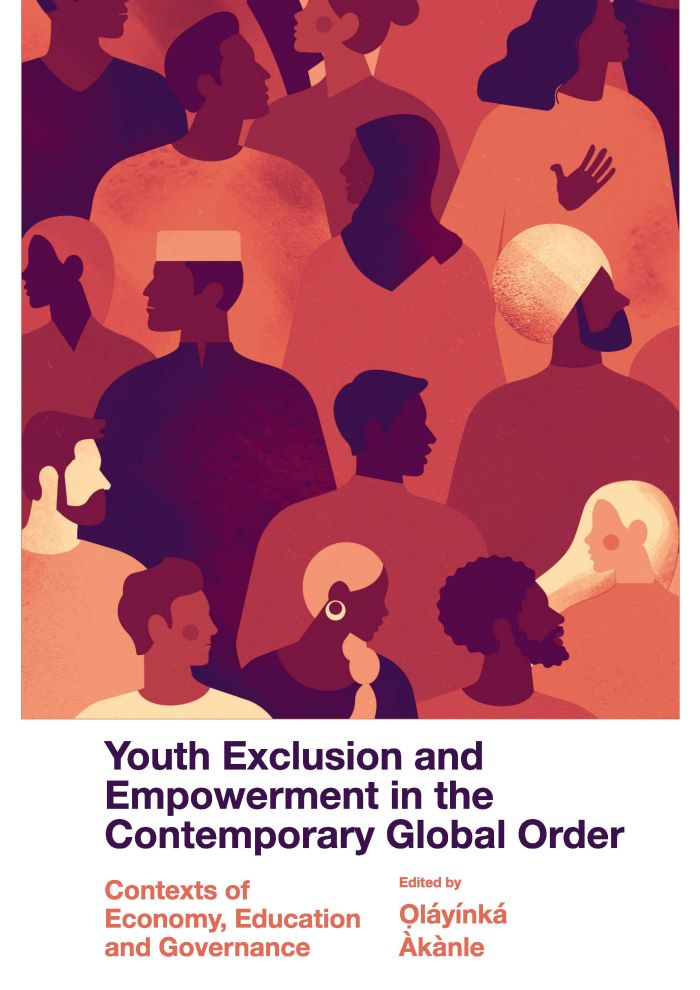

Youth Exclusion and Empowerment in the Contemporary Global Order
Contexts of Economy, Education and Governance

This book can be opened with

Note on our eBooks and Audiobooks: you can read our eBooks (ePUB or PDF) and listen to audiobooks on the free Emerald Books app on iOS, Android, and desktop. Or read and listen on Emerald's online reader (ePUB eBooks and audiobooks only). To purchase a digital book you will need to create an account if you don’t already have one. After purchasing you will receive instructions on how to get started.
- Description
- Contents
- About
The existential exclusion of youths from the mainframe of the current global order is an increasingly pressing issue. Research to date has proven youths struggle to survive and be relevant within current systemic and institutional arrangements, resulting in a major existential and generational problem. One of two volumes filling a gap in the literature in understanding and responding to this grand challenge, this edited collection focuses particularly on contexts of economic, educational and governance concerns that confront youths, the complex consequences of these issues, their experience of exclusion, and sustainable pathways forward.
Addressing youth issues from around the world, Youth Exclusion and Empowerment in the Contemporary Global Order engages with practical, pragmatic, intellectual and policy perspectives. Delving into the lived experiences of young people in many countries, the chapters bring together a rich collection of research from diverse methodologies. Revealing how young people appear trapped, strategically excluded, and helplessly frustrated by the supposedly supportive institutional frameworks of society, the authors tackle this question: how can young people become empowered and socially active in this context?
The original materials, literature and data collated across both volumes of Youth Exclusion and Empowerment in the Contemporary Global Order, addressing policy and practice issues for youth, present a cutting edge and innovative major contribution to the field of global youth studies.
Introduction; Oláyínká Àkànle
- Chapter 1. Neoliberalism and the New Paradigm in Higher Education: Youth in the Global Context; Obinna Chukwu
- Chapter 2. Challenging Exclusion From Governance and Social and Economic Systems: Perspectives in Youth-Led Protests; Oláyínká Àkànle, Irenitemi G. Abolade, Olusegun Israel Olaniyan, and Damilola Olayinka Ola-Lawson
- Chapter 3. Challenging the Links Between Deprivation, Consumption and Crime Amongst Impoverished Youth in Mexico; Minor Mora-Salas and Gustavo Adolfo Urbina-Cortés
- Chapter 4. After #RhodesMustFall: Higher Education Decolonization in South Africa and the “Born Free Generation”; Luqman Opeyemi Muraina and Yonela Mlambo
- Chapter 5. Academic Procrastination in the Age of Online Education in the Philippines; Niñoval Flores Pacaol and Andrew A. Siguan
- Chapter 6. Youth Unemployment and the Informal Sector in Nigeria; Adefolake Olusola Ademuson
- Chapter 7. Youth and Governance in Burkina Faso; Lompo Miyemba and Palé Augustin
- Chapter 8. Youths and Social Order: Locating the Youth in Namibia’s Political Economy; Kolawole Emmanuel Omomowo and Lydia Ningiree Kauari
- Chapter 9. South African Youths’ Responses to Unemployment and Exclusion; Charis Sass and Nomkhosi Xulu-Gama
- Chapter 10. Casualties of Education? Disengagement and the Reclamation of Agency for Students in Compulsory Education in England; David Allan
- Chapter 11. Youth Exclusion and Strategic Response: Undergraduates’ Engagement in Income-Earning Activities (IEAs); Oláyínká Àkànle and Ozodulukwe Oluchi Precious
- Conclusion; Oláyínká Àkànle
Oláyínká Àkànle is a Lecturer in the Department of Sociology, Faculty of Social Sciences, University of Ibadan, Nigeria, and a Research Associate in the Department of Sociology, Faculty of Humanities, University of Johannesburg, South Africa.