
A History of the Assessment of Sex Offenders

1830-2020

D. Richard Laws
Emerald
Emerald

This book can be opened with

Glassboxx eBooks and audiobooks can be opened on phones, tablets, iOS and Android devices

Hardback
9781787693609
14 February 2020
$104.99
eBook (PDF)
9781787693593
14 February 2020
$104.99
eBook (ePub)
9781787693616
14 February 2020
$104.99

Note on our eBooks and Audiobooks: you can read our eBooks (ePUB or PDF) and listen to audiobooks on the free Emerald Books app on iOS, Android, and desktop. Or read and listen on Emerald's online reader (ePUB eBooks and audiobooks only). To purchase a digital book you will need to create an account if you don’t already have one. After purchasing you will receive instructions on how to get started.

  • Description
  • Contents
  • About
Most forensic psychologists, psychiatrists and social workers involved in the assessment of sex offenders today have a good grasp of where the field stands. Many of their colleagues do not have an appreciation of why we are where we are. This book is an attempt to bridge that gap, to provide some historical background of sex offender assessment from 1830 to the present. 

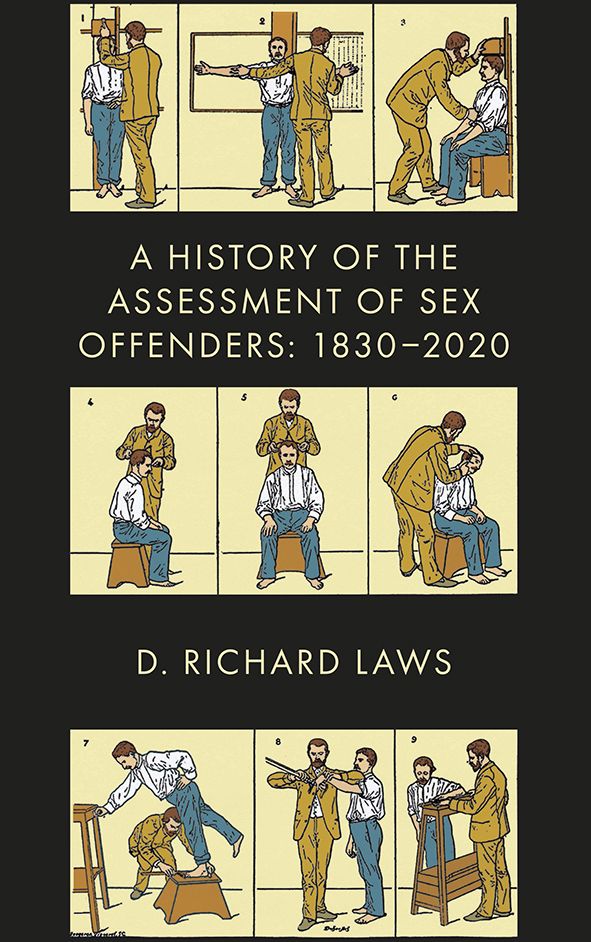
Topics covered in this book include early efforts to identify and describe criminal populations statistically; the introduction of phrenology as a description of brain function; the efforts of criminal anthropologists to develop criminal taxonomies; the technology of anthropometry to identify individuals by measurement of bodily structure; and the introduction of fingerprinting which replaced anthropometry and remains largely unchanged to the present day. The guiding principle of the book is to help the reader understand that all of this represents a continuous thread of development and, disparate as they might seem, all of them are connected. 

This book is essential reading for undergraduates in psychology and sociology, as well as professionals in training and early stages of practice.

Part 1: Introduction Chapter 1. Contemporary psychological assessment: Two approaches   Part 2: Assessment of Criminal & Sex Offenders, 19th and 20th Centuries  Chapter 2. Criminal statistics and the identification of populations Chapter 3. Offender classification and registration  Chapter 4. Phrenology: Pseudoscience of the Mind or Precursor Science?  Chapter 5. Criminal anthropology: Lombroso's search for Criminal Man  Chapter 6. Anthropometry: Bertillon's measurement of Criminal Man  Chapter 7. Fingerprinting: A document complete in itself  Part 3: Assessment of Sex Offenders, 20th and 21st Centuries  Chapter 8. Psychophysiological assessment: Penile plethysmography  Chapter 9. Viewing time: An attention-based measure  Chapter 10. Attention-based measures: Supplementary procedures  Chapter 11. Polygraphy: Valid procedure or bogus pipeline?  Part 4: Assessment of Sex Offenders: Possible Futures  Chapter 12. Virtual reality assessment: Is anybody there?  Part 5: Conclusions  Chapter 13. What we learned in 190 years: 12 takeaways

    D. Richard Laws received his Ph.D. from Southern Illinois University-Carbondale in 1969. He was director of the Sexual Behavior Laboratory at Atascadero State Hospital in California from 1970-1985; project director at the Florida Mental Health Institute, Tampa, from 1985-1989; manager of forensic psychology at Alberta Hospital, Edmonton, Alberta from 1989-1994; and as a forensic psychologist with Adult Forensic Psychiatric Community Services in Victoria, British Columbia from 1994-1999. Dr Laws has published widely in the area of sexual abuse and is best known as a developer of assessment procedures and behavior therapies.