
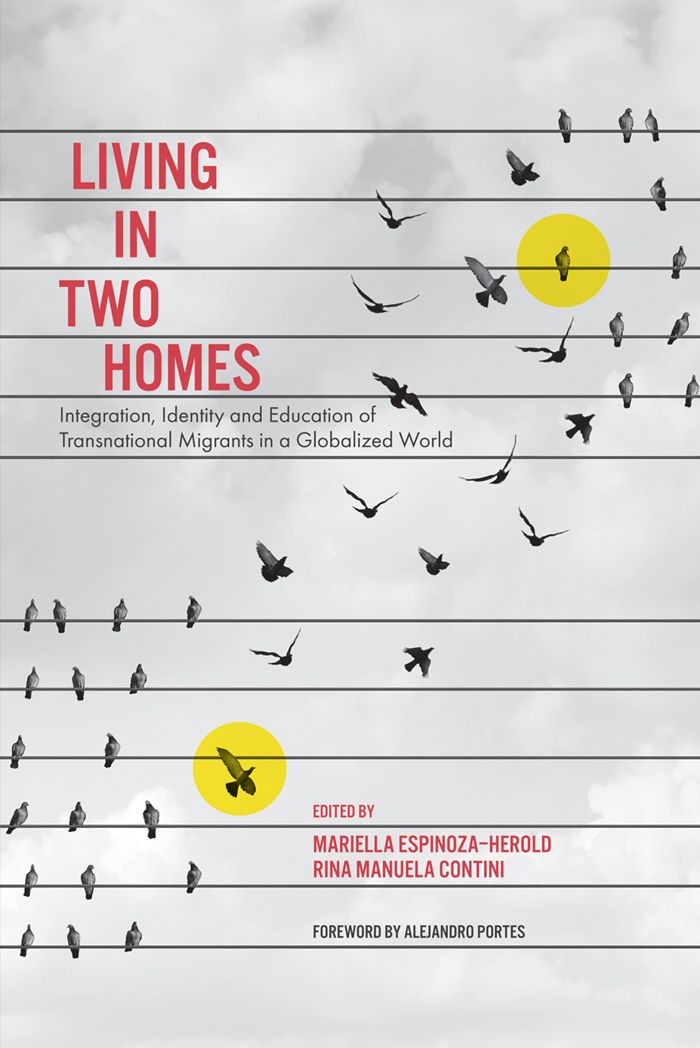
Living in Two Homes

Integration, Identity and Education of Transnational Migrants in a Globalized World

Mariella Espinoza Herold|Rina Manuela Contini
Emerald
Emerald

This book can be opened with

Glassboxx eBooks and audiobooks can be opened on phones, tablets, iOS and Android devices

Hardback
9781786357823
21 April 2017
$135.99
eBook (PDF)
9781786357816
21 April 2017
$135.99
eBook (ePub)
9781787146303
21 April 2017
$135.99

Note on our eBooks and Audiobooks: you can read our eBooks (ePUB or PDF) and listen to audiobooks on the free Emerald Books app on iOS, Android, and desktop. Or read and listen on Emerald's online reader (ePUB eBooks and audiobooks only). To purchase a digital book you will need to create an account if you don’t already have one. After purchasing you will receive instructions on how to get started.

  • Description
  • Contents
  • Reviews
  • About
Globalization and dynamic transnational migrations are bringing remarkable demographic differences to Europe and the United States. Transnational immigration flows from Eastern Europe, Africa and elsewhere are creating economical and educational inequities that are forcing EU nation- states to reflect on these differences and imagine solutions. 
Immigrants bring cultural practices, forms of art, and perspectives on all aspects of human experience that transform and enrich the cultures of host countries. Dichotomies between natives and newcomers emerge, as well as new forms of identities and distinctions between "them" and "us". In addition, schools are not prepared to educate diverse children with varied educational backgrounds and languages. 
Societal inequities cannot be understood in isolation but rather need to be understood from a global perspective. This book gathers researchers from across the globe to examine paradigms, policies, and practices for developing an inclusive intercultural and transnational framework to reduce inequities. This is necessary to positively integrate culturally-diverse families, children and adolescents into schools and societies.

PART I: INTEGRATION 1. Mexican Immigrants Integration in the Midwest: A Case Study - Antonio V. Menéndez Alarcón 2. Immigrant Entrepreneurship and Mixed Cultural Competencies: Ethnographic Perspectives from Turkish Business People in Germany - Antoine Péoud 3. Immigrants and Trade Unions in Italy: What Prospects for Mobility and Careers? A Reflection Starting from the Role of Union Delegates - Maurizio Ambrosini, Deborah De Luca and Sonia Pozzi 4. Migrants in Germany: Psychological Well-Being and Integration - Flora Petakv 5. From ‘White Australia Policy’ to ‘Multicultural’ Australia: Italian and Other Migrant Settlement in Australia - Riccardo Armillei and Bruno Mascitelli PART II: IDENTITY 6. Kurdish Identity in Turkey and Educational Opportunities in Istanbul: The Case of Young Migrants - Karol P. Kaczorowski 7. Always a Foreigner? Ethnic Identity Construction and Belonging among Youth of Immigrant Origin in Norway - Mari Rysst 8. Integrating a New Diaspora: Transnational Events by Brazilians in Japan, the United States, and Europe - Angelo Ishi 9. Changes in the Personal Networks of Young Immigrants in Sweden - Gerald Mollenhorst, Christofer Edling and Jens Rydgren PART III: EDUCATION 10. School Integration as a Sociological Construct: Measuring Multiethnic Classrooms’ Integration in Italy - Maddalena Colombo and Mariagrazia Santagati 11. Meeting Great Expectations: The Experiences of Minority Students at a Canadian University - Daniyal Zuberi and Melita Ptashnick

    Researchers from Europe, Australia, the US, Canada, and Japan provide 11 case studies on the inclusion, integration, and education of multi-ethnic people in host communities and countries, their transformative identity, and the psychological impact of these mobilizations. They discuss integration issues related to second-generation Mexican immigrants to the US, German-Turkish entrepreneurs in multi-ethnic neighborhoods in Berlin, immigrants and trade unions in Italy, and immigration policy toward Italian and other populations in Australia; identity in terms of the social construction of ethnic identity among young Kurdish immigrants in Turkey, young immigrants in Norway, Brazilian immigrants in different parts of the world, and young immigrants from Iran and the former Yugoslavia in Sweden; and education challenges, such as in Italy and at Canadian universities.

    - Annotation ©2017
    Mariella Espinoza-Herold is Researcher and Professor at Northern Arizona University, USA. She has worked for over 33 years in the areas of language and literacy development, educational equity, bilingualism, and optimal program models for speakers of English as an additional language. She has authored books and many research articles in indexed journals in the United States and other international outlets. She has also served as Associate Editor of the National Association for Bilingual Education (NABE) Journal for Research and Practice (NJRP). She has been the recipient of several awards including two Fulbright fellowships that allowed her to investigate educational systems in Japan, China, Scandinavia, and several Western European nations. Rina Manuela Contini holds a PhD in Social Sciences and is an Expert in “Welfare Theories and Social Intervention” in the Department of Management & Business Administration at the University of Chieti-Pescara (Italy), she also has previous experience as a Post-Doctoral Research-Fellow “Al.Fo. Project 2012-2013”. Her research is focused on migration, educational policies, interculturality in multiethnic schools, and immigrants educational achievement. Dr. Contini has participated in many international conferences as a presenter, keynote speaker, and session organizer. She is a member and reviewer for the European Sociological Association and has been a reviewer for the American Educational Research Association.