
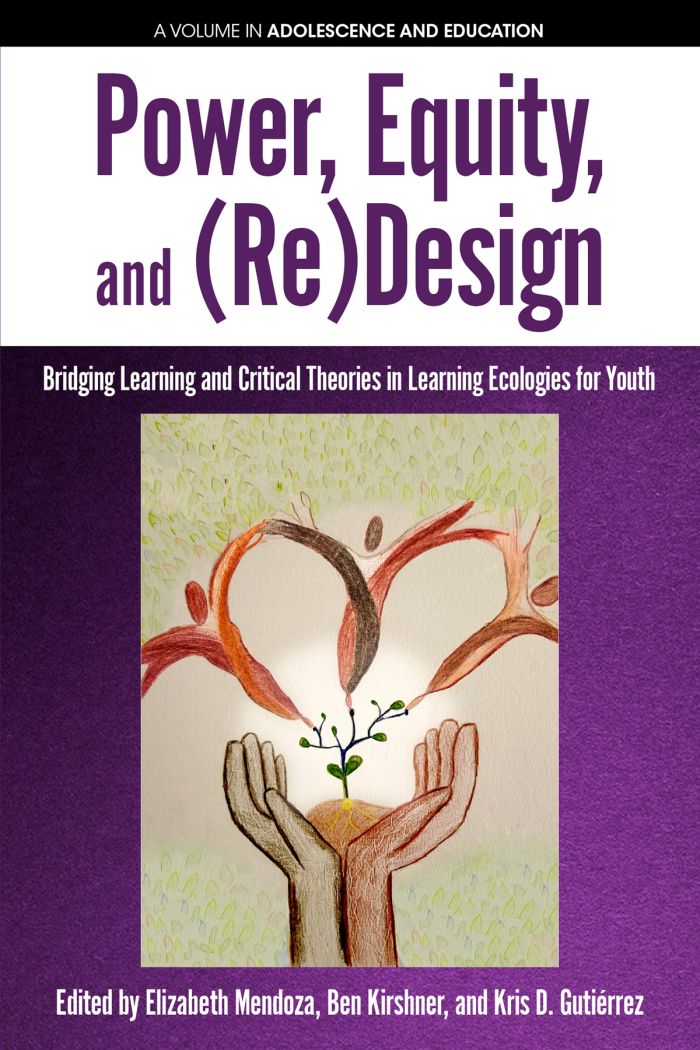
Power, Equity and (Re)Design
Bridging Learning and Critical Theories in Learning Ecologies for Youth

This book can be opened with

Note on our eBooks and Audiobooks: you can read our eBooks (ePUB or PDF) and listen to audiobooks on the free Emerald Books app on iOS, Android, and desktop. Or read and listen on Emerald's online reader (ePUB eBooks and audiobooks only). To purchase a digital book you will need to create an account if you don’t already have one. After purchasing you will receive instructions on how to get started.
- Description
- Contents
This volume brings together design thinking, critical social theory, and learning sciences to describe promising learning innovations that foster rights, dignity, and social justice for youth. The contributors are emerging scholars who are leading voices working at the intersections of theory and practice for educational equity.
Chapters in this volume take up themes of power and equity in the design and redesign of learning opportunities for young people. The chapters show variation in the kinds of learning--from complex ecologies spanning multiple institutions and age groups to specific classroom or after-school spaces. Chapters also vary in the focal ages of participants. Although most discuss experiences of young people between the ages of 12-25, some also explore the learning of elementary age youth. All of the chapters include the authors--who were researchers, designers, teachers, and facilitators--part of the narrative and process of learning. We are especially thankful that the authors of these chapters invite the reader into their thinking process and the tensions and contradictions that emerged as they sought to catalyze transformative learning spaces.
Introduction: Power, Equity, and (Re) design: Bridging Learning and Critical Theories in Learning Ecologies for Youth; Elizabeth Mendoza, Kris Gutiérrez, and Ben Kirshner.
- Chapter 1. (Re)Conceptualizing Sociopolitical Designs for Learning and Practice: How Social Justice Became Unjust in a Youth Hackathon; Sepehr Vakil and Maxine McKinney de Royston.
- Chapter 2. The Community Cooperative Project and Critical Service-Learning: Using Participatory Action Research; Joanne Tien, Exequiel Ganding, and Christyna Serrano.
- Chapter 3. Becoming a More Disruptive Teacher by Engaging in Side-by-Side Learning With Children Rather Than Avoiding Discomfort; Quinton Freeman and A. Susan Jurow.
- Chapter 4. Critical Race Design: Emerging Principles for Designing Critical and Transformative Learning Spaces; Deena Khalil and Meredith W. Kier.
- Chapter 5. Roda Real Talk: A Physical Education Teacher's Efforts to Use the Capoeira Circle as a Tool to Encourage Critical Dialogue; Vernon C. Lindsay.
- Chapter 6. Truth Does Not Always Taste Good: Flipping the Script to Promote Equity on Campus; Joy Howard.
- Chapter 7. Building Science-Learning Communities: Designing for Equitable Participation in Scientific Practices Using Students' Lived Experiences; Deb Morrison.
- Chapter 8. Schools for Community Action: Public School Design As a Revolutionary Act; Antero Garcia, Mark Gomez, and Katie Rainge Briggs.
- Chapter 9. Practitioner-Experts and Researchers in Layers of Learning: Researching and Designing Interventions in Postsecondary Education Through the Grammar of Equity; Christina H. Paguyo and Taé Nosaka.