
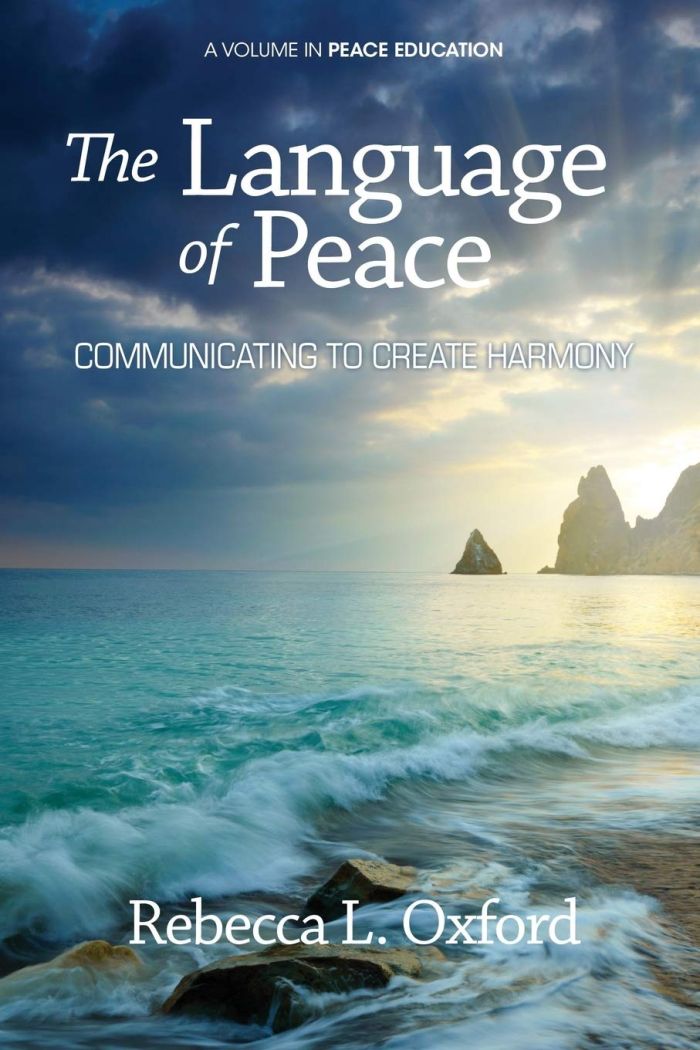
The Language of Peace
Communicating to Create Harmony

This book can be opened with

Note on our eBooks and Audiobooks: you can read our eBooks (ePUB or PDF) and listen to audiobooks on the free Emerald Books app on iOS, Android, and desktop. Or read and listen on Emerald's online reader (ePUB eBooks and audiobooks only). To purchase a digital book you will need to create an account if you don’t already have one. After purchasing you will receive instructions on how to get started.
- Description
- Contents
The Language of Peace: Communicating to Create Harmony offers practical insights for educators, students, researchers, peace activists, and all others interested in communication for peace. This book is a perfect text for courses in peace education, communications, media, culture, and other fields. Individuals concerned about violence, war, and peace will find this volume both crucial and informative.
This book sheds light on peaceful versus destructive ways we use words, body language, and the language of visual images. Noted author and educator Rebecca L. Oxford guides us to use all these forms of language more positively and effectively, thereby generating greater possibilities for peace.
Peace has many dimensions: inner, interpersonal, intergroup, international, intercultural, and ecological. The language of peace helps us resolve conflicts, avoid violence, and reduce bullying, misogyny, war, terrorism, genocide, circus journalism, political deception, cultural misunderstanding, and social and ecological injustice. Peace language, along with positive intention, enables us to find harmony inside ourselves and with people around us, attain greater peace in the wider world, and halt environmental destruction. This insightful book reveals why and how.
Part A. Fundamentals of Communication for Peace
- Chapter 1. Discovering the Language of Peace: Six Principles.
- Chapter 2. The Language of Peace in Action.
- Chapter 3. On Conflict.
- Chapter 4. Naming and Transforming Violence.
- Part B. Learning the Language of Peace Through Words and Images
- Chapter 5. Transforming Society: A Critical Discourse Analysis of Dr. King's I Have a Dream Speech.
- Chapter 6. Peace Poetry: The Drum of Reality.
- Chapter 7. Becoming Artists of Life: Using Visual Images as a Language for Learning Multidimensional Peace.
- Chapter 8. Transforming War Journalism and Circus Journalism for Peace and Balance.
- Part C. Using Peace Language Across Cultures
- Chapter 9. Changing Minds: From Creating Enemies to Creating Unity and Understanding, Rebecca Oxford, Dorrie Hancock, and Julie Zdanoski.
- Chapter 10. Communicative Gold: Transforming Communication Between Collectivist and Individualist Cultures.
- Chapter 11. Harmony and Discord Across Cultural Dialects of Body Language, Rebecca Oxford and Lauren Mackenzie.
- Part D. The Language of Peace in All of Us
- Chapter 12. The People's Peace: Fresh Ideas and Images, Tasha Parrish and Rebecca Oxford.