
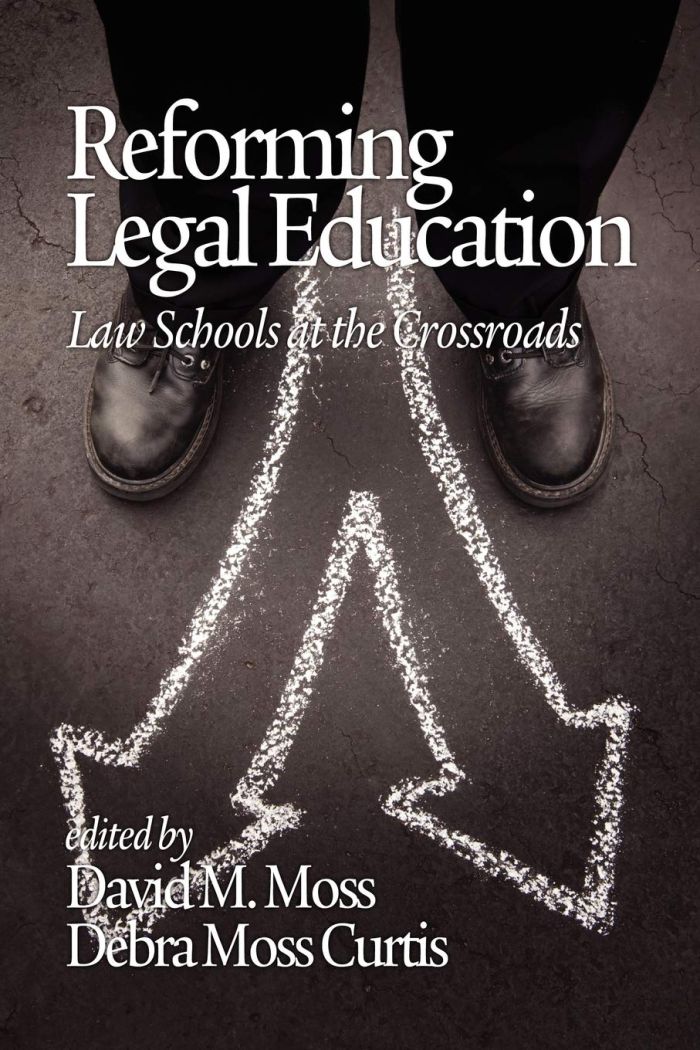
Reforming Legal Education
Law Schools at the Crossroads

This book can be opened with

Note on our eBooks and Audiobooks: you can read our eBooks (ePUB or PDF) and listen to audiobooks on the free Emerald Books app on iOS, Android, and desktop. Or read and listen on Emerald's online reader (ePUB eBooks and audiobooks only). To purchase a digital book you will need to create an account if you don’t already have one. After purchasing you will receive instructions on how to get started.
- Description
- Contents
In today’s volatile law school environment, curriculum reform has emerged as a significant focus. It is commonly understood that law schools effectively teach certain analytical skills, but are less successful in other areas, and often scramble to adapt to evolving aims. This book demonstrates how law schools are successfully reforming their curriculum - and lays the framework to show how all schools of law can engage in a continuous reform model that proactively shapes our profession.
It is expected that faculty and professional staff engaged in legal education will utilize this book as a primary resource to guide their respective reform efforts. Each contributed chapter presents a case study of a data-driven curriculum reform effort. The initial chapters set the conceptual context for the book, while the final chapter offers summative recommendations for considering legal education reform as derived from the earlier case study chapters. This book adds significantly to the literature in legal education, as we gain first hand insight into evidence based reform for the legal education community.
Chapter 1. Legal Education at the Crossroads; David M. Moss.
- Chapter 2. Washington and Lee University School of Law: Reforming the Third Year of Law School; Lyman Johnson, Robert Danforth & David Millon.
- Chapter 3. Curriculum Reforms at Washburn University School of Law; Michael Hunter Schwartz and Jeremiah A. Ho.
- Chapter 4. Reforming the Traditional Curriculum at the University of Iowa College of Law; Brian R. Farrell.
- Chapter 5. Nova Southeastern University Curriculum Mapping Project; Debra Moss Curtis & David M. Moss.
- Chapter 6. Promoting Experiential Learning at Golden Gate University School of Law; Rachel A. Van Cleave.
- Chapter 7. Creating an Outcomes-Based Curriculum at Charlotte School of Law; Cynthia F. Adcock.
- Chapter 8. Learning-Centered Education at Western State College of Law; Paula Manning.
- Chapter 9. Leveraging Academic Support Programs for Innovative Teaching Methods Across the Curriculum; Rebecca C. Flanagan.
- Chapter 10. Essential Elements for the Reform of Legal Education; David M. Moss & Debra Moss Curtis.
- About the Contributors.
- Index.