
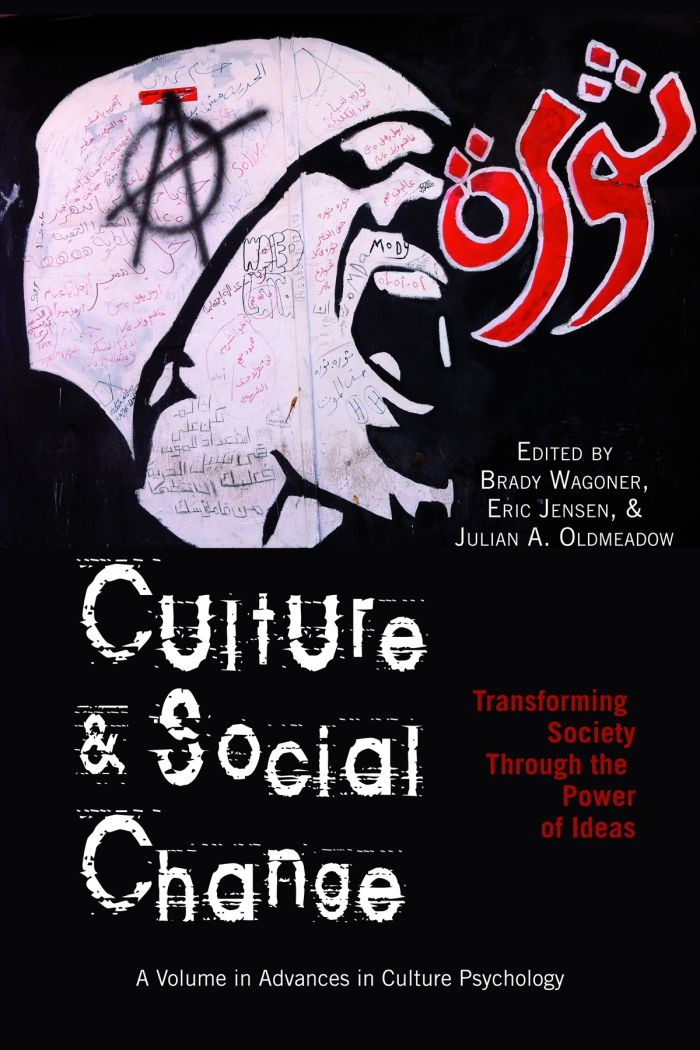

Culture and Social Change
Transforming Society Through the Power of Ideas

This book can be opened with

Note on our eBooks and Audiobooks: you can read our eBooks (ePUB or PDF) and listen to audiobooks on the free Emerald Books app on iOS, Android, and desktop. Or read and listen on Emerald's online reader (ePUB eBooks and audiobooks only). To purchase a digital book you will need to create an account if you don’t already have one. After purchasing you will receive instructions on how to get started.
- Description
- Contents
This book brings together social sciencists to create an interdisciplinary dialogue on the topic of social change as a cultural process. Culture is as much about novelty as it is about tradition, as much about change as it is about stability. This dynamic tension is analyzed in collective protests, intergroup dynamics, language, mass media, science, community participation, art, and social transitions to capitalism, among others contexts. These diverse cases illustrate a number of key factors that can propel, slow-down and retract social change. An emancipatory and integrative social science is developed in this book, which offers a new explanatory model of human behavior and thought under conditions of institutional and societal change.
Series Editor Preface: Semiotic Freedom for the Social Sciences: Inquiry in a New Key; Jaan Valsiner.
- Chapter 1. Introduction: Changing Times, Changing Science; Brady Wagoner, Eric Jensen, and Julian Oldmeadow.
- Part I. Collective Action In Context.
- Chapter 2. The Psychology of Collective Action: Crowds and Change; John Drury, Steve Reicher, and Clifford Scott.
- Chapter 3. Commentary: Collectives May Protest, But How Do Authorities Respond? Flora Cornish.
- Chapter 4. Change We Can Believe in: The Role of Social Identity, Cognitive Alternatives, and Leadership in Group Mobilization and Transformation; Stephen D. Reicher and S. Alexander Haslam.
- Chapter 5. Commentary: Change Non-Westerners Can Believe In; Fathali Moghaddam, Zach Warren, and Rhea Vance-Cheng.
- Part II. Communicating Change.
- Chapter 6. Metaphor and Stories in Discourse About Personal and Social Change; David Ritchie.
- Chapter 7. Commentary: The Earth, Olympus, and the Commuter Bus; Carlos Cornejo.
- Chapter 8. Balancing Stability and Change: A Neo-Diffusionist Perspective on Cultural Dynamics of Socially Transformative Ideas; Yoshihisa Kashima, Boyka Bratanova, and Kim Peters.
- Chapter 9. Commentary: The Meeting of Ideas: Diffusion, Dialogical Interaction, and Social Change; Brady Wagoner.
- Chapter 10. Scientific Controversies and the Struggle for Symbolic Power; Eric Jensen.
- Chapter 11. Commentary: The Struggle for Scientific Consensus: Communicating Climate Science around COP-15; Rick Holliman.
- Part III. Societies In Transition.
- Chapter 12. Mediating Social Change in Authoritarian and Democratic States: Irony, Hybridity, and Corporate Censorship; Eric Jensen.
- Chapter 13. Commentary: Subversively Funny: Critical Humor in Art; Lisa Taylor-Sayles.
- Chapter 14. Assessing Social Change Through Social Capital: Local Leadership and Social-Political Change in Bolivia; Martin Mendoza.
- Chapter 15. Commentary: Social Influence and Social Change: States and Strategies of Social Capital; Gordon Sammut, Eleni Andreouli and Mohammad Sartawi.
- Chapter 16. Changing Fields, Changing Habitusus: The Field of Public Service in Post-Soviet Ukraine; Anastasia Ryabchuk.
- Chapter 17. Commentary: Dependent Independence: A Mechanism for Conciliating Determinism and Freedom; Maaris Raudsepp.
- Chapter 18. Conclusion: A Cyclical Model of Social Change; Brady Wagoner, Eric Jensen.
- About the Authors.