
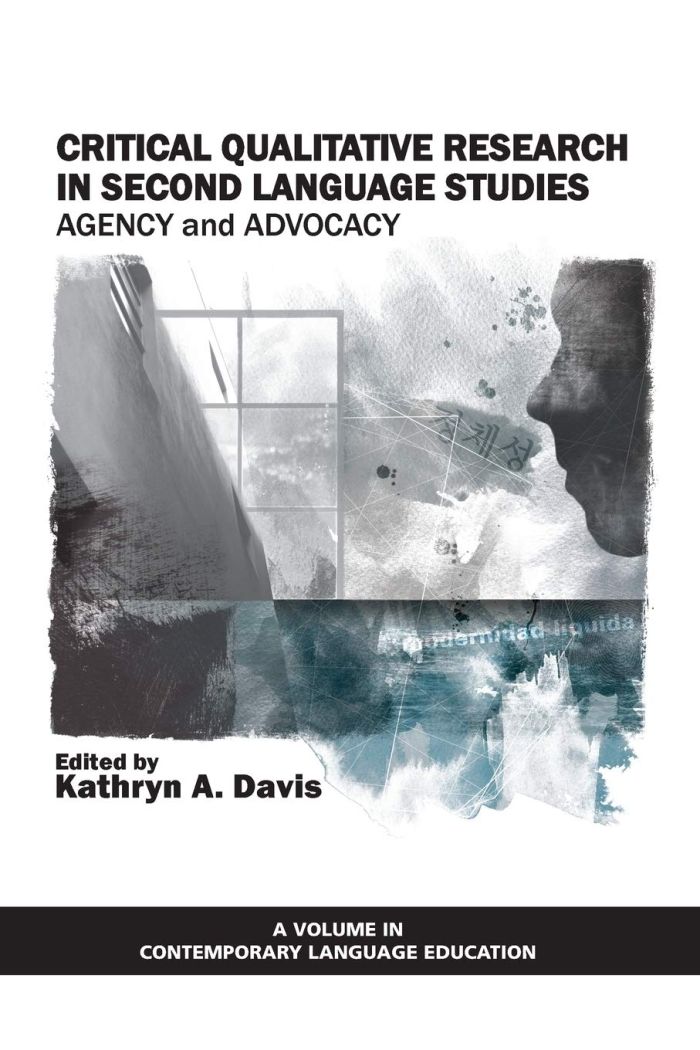
Critical Qualitative Research in Second Language Studies
Agency and Advocacy

This book can be opened with

Note on our eBooks and Audiobooks: you can read our eBooks (ePUB or PDF) and listen to audiobooks on the free Emerald Books app on iOS, Android, and desktop. Or read and listen on Emerald's online reader (ePUB eBooks and audiobooks only). To purchase a digital book you will need to create an account if you don’t already have one. After purchasing you will receive instructions on how to get started.
- Description
- Contents
This volume begins by locating critical inquiry within the epistemological and methodological history of second language study. Subsequent chapters portray researcher-participant exploration of identity and agency while challenging inequitable policies and practices. Research on internationalization, Englishization, and/or transborder migration address language policies and knowledge production at universities in Hong Kong, Standard English and Singlish controversies in Singapore, media portrayals of the English as an Official Language movement in South Korea, transnational advocacy in Japan, and Nicaraguan/Costa Rican South to South migration. Transnational locations of identity and agency are fore-fronted in narrative descriptions of Korean heritage language learners, a discursive journey from East Timor to Hawaii, and a reclaimed life history by a Chinese peasant woman. Labor union and GLBT legal work illustrate discourses that can hinder or facilitate agency and change. Hawaiian educators advocate for indigenous self-determination through revealing the political and social meanings of research. California educators describe struggles at the front-lines of resistance to policies and practices harmful to marginalized children. A Participatory Action Research (PAR) project portrays how Latina youth in the U.S. “resist wounding inscriptions” of the intersecting emotional and physical violence of homes, communities, and anti-immigrant policies and attitudes. Promoting agency through drawing on diversity resources is modeled in a bilingual undergraduate PAR project. The volume as a whole provides a model for critical research that explores the multifaceted and evolving nature of language identities while placing those traditionally known as participants at the center of agency and advocacy.
Preface.
- Chapter 1. Introduction: Towards Critical Qualitative Research in Second Language Studies; Kathryn A. Davis.
- Part I. Sociopolitical Contexts Of Research, Law, And Policies.
- Chapter 2. When the Children of Their Fathers Push Back! Self-Determination and the Politics of Indigenous Research; Margaret J. Maaka, K. Laiana Wong, and Katrina-Ann R. Kapaanaokalaokeola Oliveira.
- Chapter 3. In the Name of the Child: Best Interest Analysis and the Power of Legal Language; Susan Hippensteele.
- Chapter 4. Discourses of English as an Official Language in a Monolingual Society: The Case of South Korea; Ok Kyoon Yoo.
- Chapter 5. The Context and Development of Language Policy and Knowledge Production in Universities in Hong Kong; Angel M. Y. Lin and Evelyn Y. F. Man.
- Chapter 6. Sin(gapore En)glish Oracy Education: An Online Discussion; Warren Mark Liew.
- Part II. Performing Identities And Agency.
- Chapter 7. Pointless; K. Laiana Wong.
- Chapter 8. Identity and Agency among Heritage Language Learners; Miyung Park.
- Chapter 9. From East Timor to Transnational Dialogic Interaction: Agus Language and Literacy Journey; Yun Seon Kim with Agustinho Caet.
- Chapter 10. Finding and Reading Road Signs in Ethnographic Research: Studying the Language and Stories of the Unwelcome Stranger; Carlos Ovando and Steven Locke.
- Chapter 11. Agency as Seen through the Life Story of a Chinese Peasant Woman; Xiao Rui Zhang.
- Part III. Participatory Approaches And Practices.
- Chapter 12. Teachers Organizing to Resist in a Context of Compliance; Lucinda Pease-Alvarez and Alisun Thompson.
- Chapter 13. Transformation and Agency: Participatory Action Research with Bilingual Undergraduates; Hye-sun Cho.
- Chapter 14. Using Student-as-Researcher Models as a Mode of Resistance and Agency: Creative Maladjustment in an Urban High School; Renae Skarin.
- Chapter 15. Promoting Translocal and Transnational Agency: A Multifaceted Learning Community in Japan; Hiromasa Tanaka and Ethel Ogane.
- Chapter 16. Participatory Second Language Labor Education: Communities Of Practice And The Foreign Worker Union Movement In Japan; John W. McLaughlin.
- Contributors.