
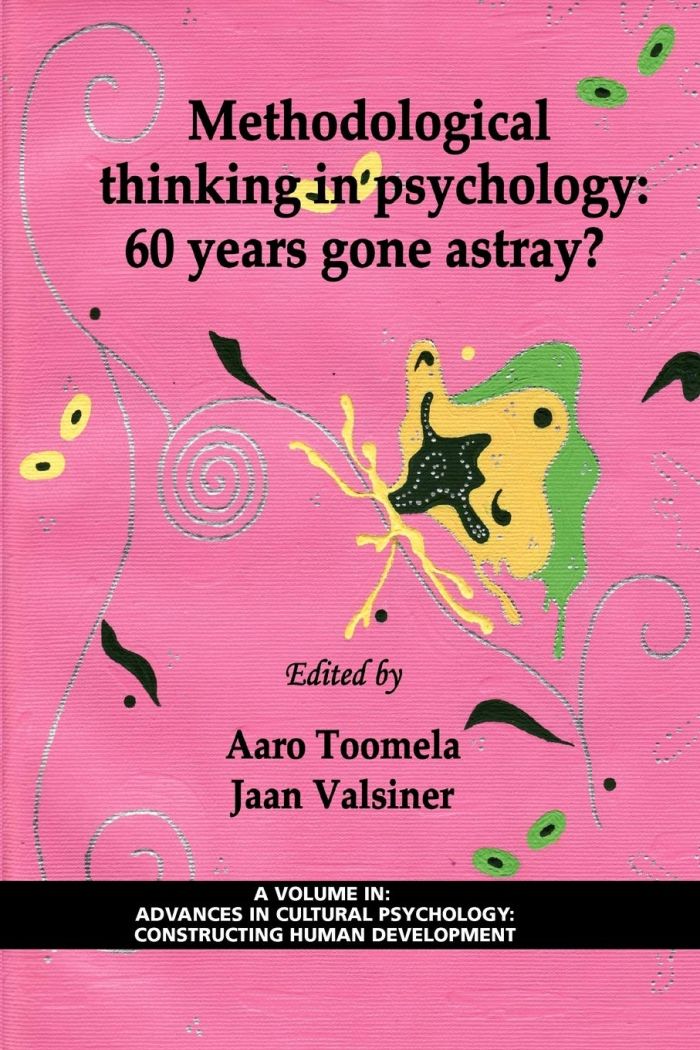

Methodological Thinking in Psychology
60 Years Gone Astray?

This book can be opened with

Note on our eBooks and Audiobooks: you can read our eBooks (ePUB or PDF) and listen to audiobooks on the free Emerald Books app on iOS, Android, and desktop. Or read and listen on Emerald's online reader (ePUB eBooks and audiobooks only). To purchase a digital book you will need to create an account if you don’t already have one. After purchasing you will receive instructions on how to get started.
- Description
- Contents
In recent years an increasing dissatisfaction with methods and thinking in psychology as a science can be observed. The discipline is operating under the tension between the traditional quantitative and the new qualitative methodologies. New approaches emerge in different fields of psychology and education—each of them trying to go beyond limitations of the mainstream. These new approaches, however, tend to be “historically blind” – seemingly novel ideas have actually been common in some period in the history of psychology. Knowledge of historical trends in that context becomes crucial because analysis of historical changes in psychology is informative regarding the potential of “new/old and forgotten” approaches in the study of psyche. Some approaches in psychology disappeared due to inherent limitations of them; the others disappeared due to purely non-scientific reasons. And some new approaches were rejected long ago for well-justified scientific reasons.
This book brings together contributions from leading scholars in different fields of psychology – cognitive psychology, developmental psychology, cultural psychology, methodology of psychology. Each of the contributors discusses methodological issues that were more thoroughly understood more than half a century ago than they are now. Overall, the contributions support the idea that in important ways 60 years old psychology was far ahead of the most recent trends in mainstream psychology.
Chapter 1. Modern Mainstream Psychology Is the Best? Noncumulative, Historically Blind, Fragmented, Atheoretical; Aaro Toomela.
- Chapter 2. Questions, Patterns, and Explanations, Not Hypothesis Testing, Is the Core of Psychology as of Any Science; Stellan Ohlsson.
- Chapter 3. The Quantity/Quality Interchange: A Blind Spot on the Highway of Science; Joel Michell.
- Chapter 4. Studying the Movement of Thought; Alex Gillespie and Tania Zittoun.
- Chapter 5. Understanding a Personality as a Whole: Transcending the Anglo-American Methods Focus and Continental-European Holism Through a Look at Dynamic Emergence Processes; Tatsuya Sato, Kosuke Wakabayashi, Akinobu Named, Yuko Yasuda and Yoshiyuki Watanabe.
- Chapter 6. Metaphors in Psychological Conceptualization and Explanation; Hans Dooremalen and Denny Borsboom.
- Chapter 7. Remembering Methodology: Experimenting with Bartlett; Brady Wagoner.
- Chapter 8. Reflections on Some Neglected Ideas About Psychological Measurement from the Personalistic Perspective of William Stern (1871–1938); James T. Lamiell.
- Chapter 9. Qualitative Developmental Psychology; Günter Mey.
- Chapter 10. The Role of Observational Methodology and the Application of Film in Early American and European Developmental Psychology; Kurt Kreppner.
- Chapter 11. What Would Be Gustav Theodor Fechner Legacy for Psychology in the 21st Century? Arno Engelmann.
- Chapter 12. Forgotten Methodology: Vygotsky's Case; Nikolai Veresov.
- Chapter 13. Vygotsky's Methodological Approach: A Blueprint for the Future of Psychology; Holbrook Mahn.
- Chapter 14. General Conclusion: Have Sixty Years Really Gone Astray? Back to the Future; Aaro Toomela and Jaan Valsiner.
- Contributors.