
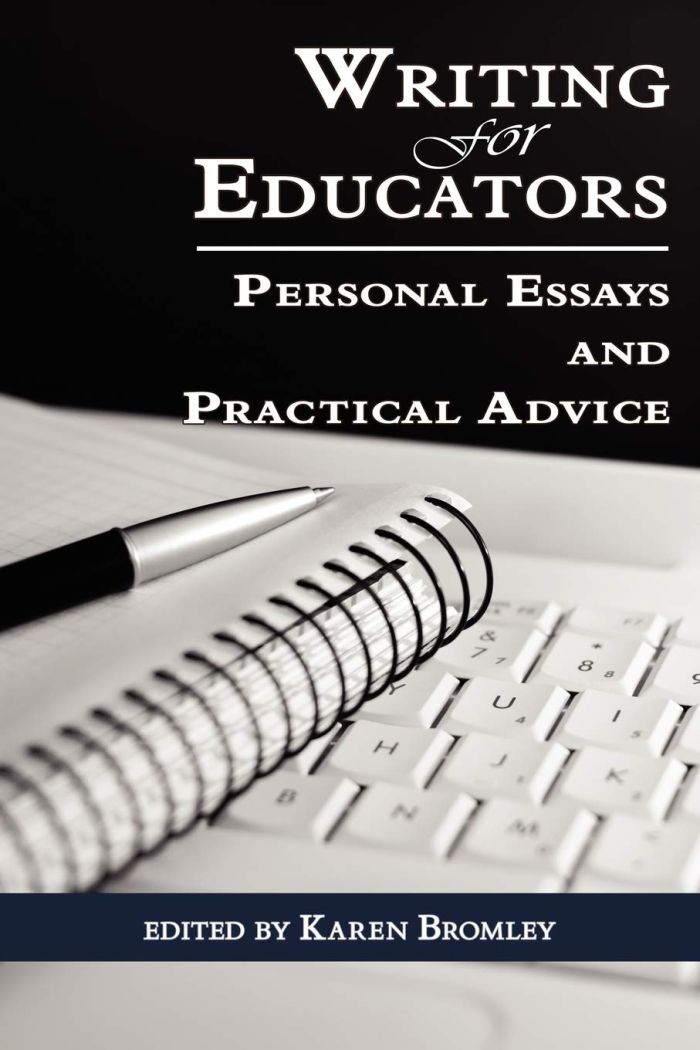
Writing for Educators
Personal Essays and Practical Advice

This book can be opened with

Note on our eBooks and Audiobooks: you can read our eBooks (ePUB or PDF) and listen to audiobooks on the free Emerald Books app on iOS, Android, and desktop. Or read and listen on Emerald's online reader (ePUB eBooks and audiobooks only). To purchase a digital book you will need to create an account if you don’t already have one. After purchasing you will receive instructions on how to get started.
- Description
- Contents
This book is for new faculty, graduate students, teachers, administrators, and other academics who want to write more clearly and have their work published. The essays focus on writing journal articles, dissertations, grants, edited books, and other writing in educational settings. The authors are educators who share their own first-hand experiences that provide novice writers with important knowledge and support in the quest for success in professional scholarly writing. A variety of authors discuss the writer’s craft, including issues of voice, audience, planning, drafting, revision, conventions, style, submitting to journals, editorial review, and editing.
Introduction.
- Section I. Finding Your Voice.
- Chapter 1. What? Me Write? Six Reasons to Write for Publication; James J. Carpenter.
- Chapter 2. Finding Ideas and Developing the Confidence to Write for Publication; Chris Pescatore.
- Chapter 3. Writing-to-Learn: Understanding What You Know; Maureen Boyd.
- Chapter 4. Reading as a Way to Develop a Writing Identity; Nicholas Paley.
- Section II. Writing An Article Or Dissertation.
- Chapter 5. From Idea to Printed Page; Marilyn Tallerico.
- Chapter 6. Writing to be Read: Clarity and Power in Scholarly Writing; C. Beth Burch.
- Chapter 7. Creating a Corpus: Writing to Shape Practice; Beverly Rainforth.
- Chapter 8. Nine Notes From a Novice: Publishing a Teaching Idea; Margaret Golden.
- Chapter 9. Writing With Publication in Mind; Joan Bouza Koster.
- Chapter 10. Completing a Dissertation in Just Over Two Years; Holly Hansen Thomas.
- Chapter 11. Four children and a dissertation; Sandi Graham.
- Section III. Reviews, Revising, And Editing.
- Chapter 12. Surviving the Review Process: The Good, the Bad, and the Ugly; Jenny Gordon.
- Chapter 13. Rethink, Rewrite, Revise: Mining the Gold; Heather Sheridan-Thomas.
- Chapter 14. Revising for Successful Publication; Mitch Rosenwald.
- Chapter 15. Editing a Book: Nine Questions and Some Answers; Karen Bromley.
- Chapter 16. An Editor's Perspective on the Importance of Style; Jean Schmittau.
- Section IV. Grant Writing.
- Chapter 17. Writing a Grant Proposal; Karen Bromley.
- Chapter 18. Grant writing for Teachers; Pat Krizan.
- Chapter 19. The Collaborative Grant Development Process; Allison Alden.
- Section V. Other Writing In Educational Settings.
- Chapter 20. On-Demand Writing by Administrators; Carol Stark.
- Chapter 21. A Principal's Writing Experiences; Doug Green.
- Chapter 22. My Surprising Life as an Author; Jo Malin.
- Appendices
- A. Quotes About Writing.
- B. Forming a Writing Group.
- C. Leads.
- D. Feedback on Manuscripts.
- E. PQS (Praise, Question , Suggest).
- F. A Writing Rubric.
- G. Sample Cover Letter.
- H. Manuscript Tracking Form.
- I. Annotated Bibliography of Books for Administrators.
- J. Annotated Bibliography of Books for Academics.
- About the Authors.