
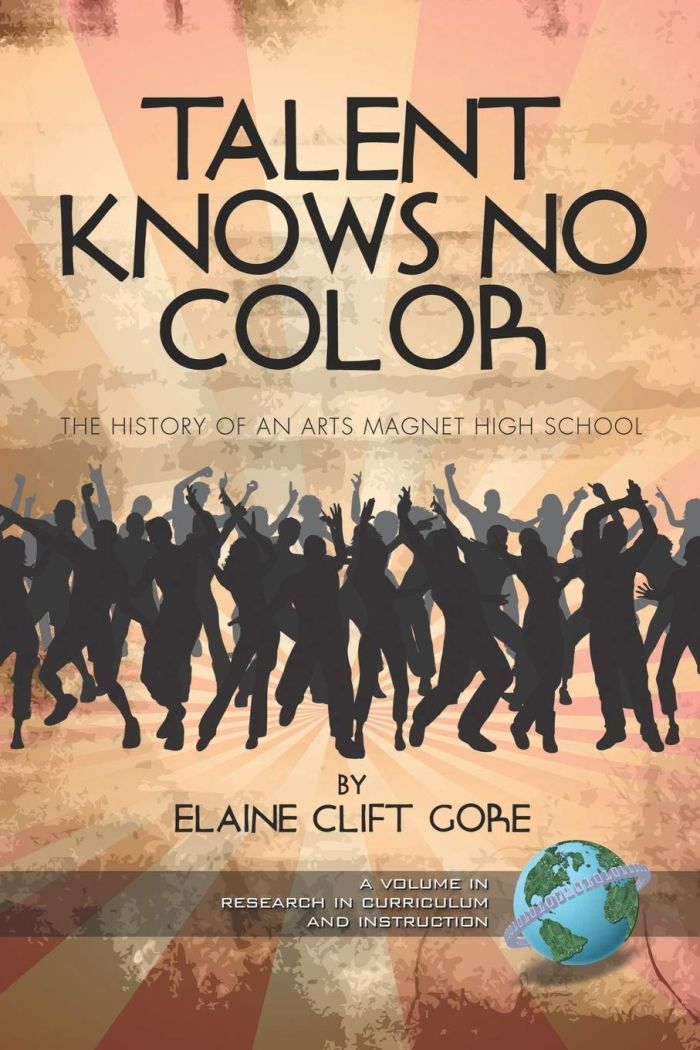
Talent Knows No Color
The History of an Arts Magnet High School

This book can be opened with

Note on our eBooks and Audiobooks: you can read our eBooks (ePUB or PDF) and listen to audiobooks on the free Emerald Books app on iOS, Android, and desktop. Or read and listen on Emerald's online reader (ePUB eBooks and audiobooks only). To purchase a digital book you will need to create an account if you don’t already have one. After purchasing you will receive instructions on how to get started.
- Description
- Contents
In the summer of 1970, the members of the New Orleans Fifth Circuit Court of Appeals understood clearly the realities of race in the South. Houston, Texas, like other Southern cities, had made haste toward racial school desegregation as slowly as the White Southern Federal courts would allow. When the High School of Performing and Visual Arts opened its doors in Houston a year later, a new superintendent and liberal-dominated Board of Education wished to demonstrate the positive potential of a voluntarily desegregated student body. HSPVA was the first United States public school for the arts specifically used for racial desegregation purposes, the prototype for the first public urban magnet program of desegregation used to replace a standing court order, and a continuing prototype for other public magnet schools for the arts across the United States.
Talent Knows No Color is a 35-year history of HSPVA, exemplary in both arts and academics, which chronicles multi-perspective participant experiences within the context of ever-changing district education policies and demographics. Ten years of school system and HSPVA archival research, examination of local newspapers, and oral history interviews allow a rich narrative unusual among the already limited number of scholarly histories of individual public schools. It is the description and analysis of everyday occurrences that assist the reader in understanding what Series Editor O. L. Davis, Jr. refers to as “the continuing, likely never ending, practical development of one particular high school and its curriculum.”
Foreword.
- Preface.
- Acknowledgments.
- Part I. HSPVA Origins.
- Chapter 1. Beginning.
- Chapter 2. Creating a Reputation.
- Part II. On the Map.
- Chapter 3. Schooling in a $7,000,000 Goldfish Bowl.
- Chapter 4. Refining a Reputation.
- Part III. The Mature School.
- Chapter 5. Succeeding in a New Era.
- Chapter 6. Historical Rhetoric and Reality.