
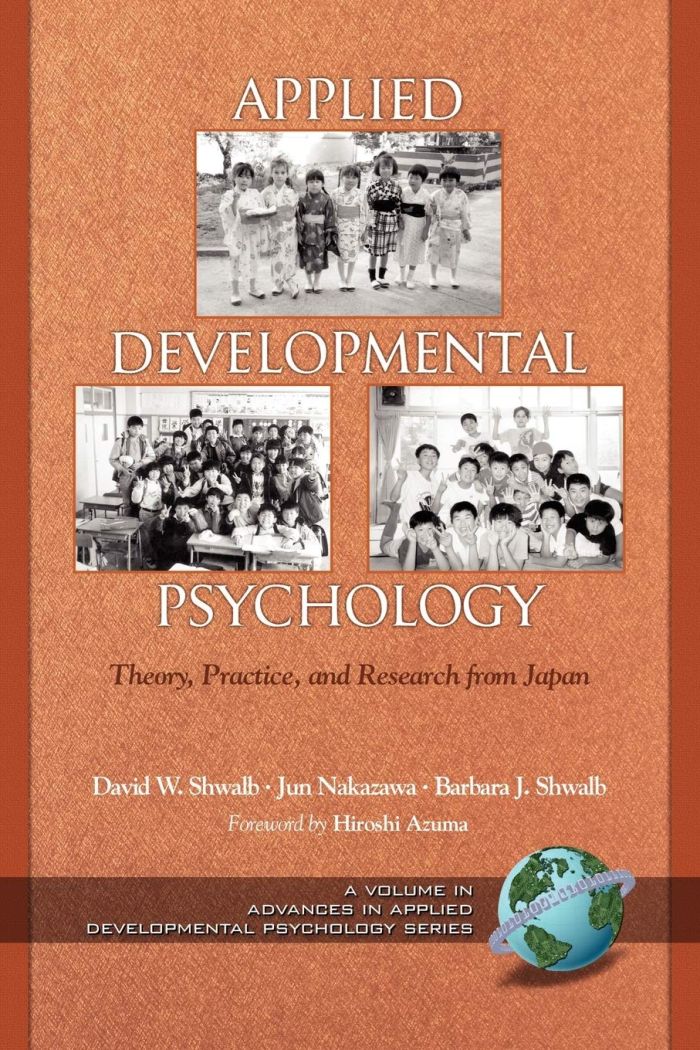
Applied Developmental Psychology
Theory, Practice, and Research from Japan

Emerald
This book can be opened with

Note on our eBooks and Audiobooks: you can read our eBooks (ePUB or PDF) and listen to audiobooks on the free Emerald Books app on iOS, Android, and desktop. Or read and listen on Emerald's online reader (ePUB eBooks and audiobooks only). To purchase a digital book you will need to create an account if you don’t already have one. After purchasing you will receive instructions on how to get started.
- Description
- Contents
This volume provides an overview of recent research on child development in Japan. Sixteen contributions from leading psychologists cover such topics as the development of manga (comic book) literacy, the study of mathematics in school, and the effects of job- related temporary father absence.
Foreword; Hiroshi Azuma
- To the Reader; Irving Sigel.
- Introduction; David Shwalb, Jun Nakazawa, Barbara Shwalb.
- Section I. Technology and Media Influences.
- Chapter 1. Video Games and the Psychological Development of Japanese Children; Akira Sakamoto.
- Chapter 2. Development of Manga (Comic Book) Literacy in Children; Jun Nakazawa.
- Chapter 3. Longitudinal Research on Children's Vulnerability to Television; Takashi Muto, Shiori Sumiya, and Mami Komaya.
- Section II. Cognitive Development and Education.
- Chapter 4. Cognitive Counseling to Improve Students' Metacognition and Cognitive Skills; Shin'ichi Ichikawa.
- Chapter 5. Children's Misconceptions: Research on Improving Understanding of Mathematics and Science; Keiichi Magara.
- Chapter 6. Motivation for Abacus Studies and School Mathematics: A Longitudinal Study of Japanese 3rd–6th Graders; David Shwalb, Shuji Sugie, and Chongming Yang.
- Chapter 7. Developmental Processes of Literacy in Japan: Kana Reading in Early Childhood; Kiyomi Akita.
- Section III. Children with Disabilities.
- Chapter 8. Use of Electronic and Information Technologies for Japanese Children with Developmental Disabilities; Kenryu Nakamura, Mamoru Iwabuchi, and Satoshi Sakai.
- Chapter 9. Language Interventions Using Scripts for Children with Down Syndrome; Tsutomu Nagasaki and Miho Onozato.
- Chapter 10. Social Cognitive Development of Autistic Children: Attachment Relationships and Understanding the Existence of Minds of Others; Satoshi Beppu.
- Section IV. Research on the Family with Policy Implications.
- Chapter 11. Maternal Employment and Child Development in Japan: A Twelve-Year Longitudinal Study; Masumi Sugawara.
- Chapter 12. Job-Related Temporary Father Absence (Tanshinfunin) and Child Development; Yuko Tanaka and Jun Nakazawa.
- Chapter 13. Child Abuse in Japan: Developmental, Cultural, and Clinical Perspectives; Junichi Shoji.
- Section V. Peer Relations.
- Chapter 14. School Absenteeism, Bullying, and Loss of Peer Relationships in Japanese Children; Toru Hosaka.
- Chapter 15. Bullying and Peer Support Systems in Japan: Intervention Research; Yuichi Toda.
- Chapter 16. Peer Adjustment Processes of a Five-Year-Old Chinese Boy in a Japanese Day Nursery; Makoto Shibayama.