
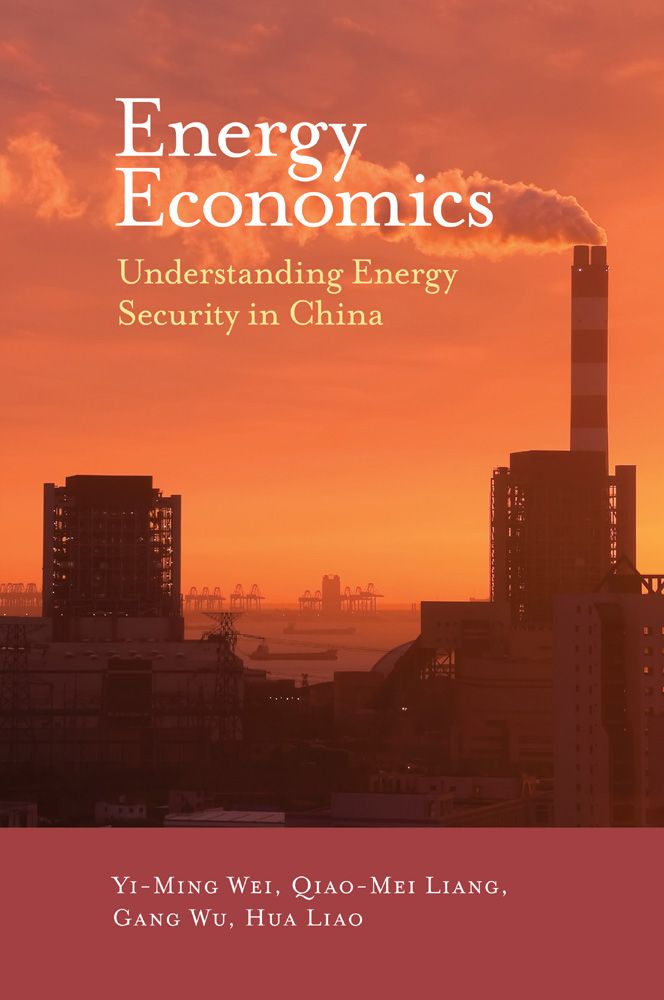
Energy Economics

Understanding Energy Security in China

Yi-Ming Wei|Qiao-Mei Liang|Gang Wu|Hua Liao
Emerald
Emerald

This book can be opened with

Glassboxx eBooks and audiobooks can be opened on phones, tablets, iOS and Android devices

Hardback
9781838672942
23 September 2019
£111.99
eBook (PDF)
9781838672935
23 September 2019
£111.99
eBook (ePub)
9781838672959
23 September 2019
£111.99

Note on our eBooks and Audiobooks: you can read our eBooks (ePUB or PDF) and listen to audiobooks on the free Emerald Books app on iOS, Android, and desktop. Or read and listen on Emerald's online reader (ePUB eBooks and audiobooks only). To purchase a digital book you will need to create an account if you don’t already have one. After purchasing you will receive instructions on how to get started.

  • Description
  • Contents
  • Reviews
  • About
As the largest energy consuming country and the second largest oil importing country, China has been the net importer of all fossil energy since 2009. With its increasing external energy dependence year by year, as well as frequent occurrences of oil, coal, and electricity shortages, the issue of energy security has been increasingly serious. What is the level of energy security in China? How might we improve national energy supply security and reduce energy trade risks?  

This book sets out a systematic piece of research which attempts to tackle these hot issues. It starts with the history of world energy geopolitics and domestic energy security, focusing on the hot issues of the complexity of the international energy market, and moves to domestic energy import trade risks, domestic strategic energy reserve strategies, and the impact of the energy crisis on domestic economy. Further insights include the environmental and health effects of energy consumption, the development potential of renewable energy, energy security early-warning and contingency plans, and an international comparison of energy security.  

The book will be an insightful resource for researchers and students of energy economics and energy management. It will also be a helpful support and reference tool for decision-makers in the energy industry.

Chapter 1. Review of World Energy Situation and China's Energy Security Chapter 2. World Energy Geopolitics Development and China's Energy Diplomacy  Chapter 3. Oil Price and Energy Security  Chapter 4. Assessment of Energy Import and Transportation Risk of China  Chapter 5. Research on China's Energy Reserve Strategy  Chapter 6. Key Provincial Sectors for Energy Conservation in China  Chapter 7. Effects of Clean and Renewable Energy on National Energy Security  Chapter 8. Energy Poverty and Energy Use Security  Chapter 9. Energy Supply Crisis and Economic Security Research  Chapter 10. Energy Consumption and Public Health in China  Chapter 11. Comprehensive Evaluation of National Energy Security  Chapter 12. Challenges and Outlook of China's Energy Security

    In order to assess the level of China's energy security and suggest how to improve the national energy supply security and reduce the energy trade risks, Wei and colleagues consider such aspects as the world energy situation and China's energy security, assessing Chinese energy import and transportation risks, key provincial sectors for energy conservation in China, effects of clean and renewable energy on national energy security, energy consumption and public health in China, and challenges and outlook of China's energy security.

    - Copyright 2019
    Yi-Ming Wei is Distinguished University Professor of Energy and Environmental Economics and Director of the Center for Energy and Environmental Policy Research at the Beijing Institute of Technology. 
    Qiao-Mei Liang is Professor of the Center for Energy and Environmental Policy Research at the Beijing Institute of Technology. 
    Gang Wu is Director of the Division of Business Administration in the Department of Management Sciences at the National Natural Science Foundation of China. 
    Hua Liao is Professor and Deputy Director of the Center for Energy and Environmental Policy Research at the Beijing Institute of Technology.