
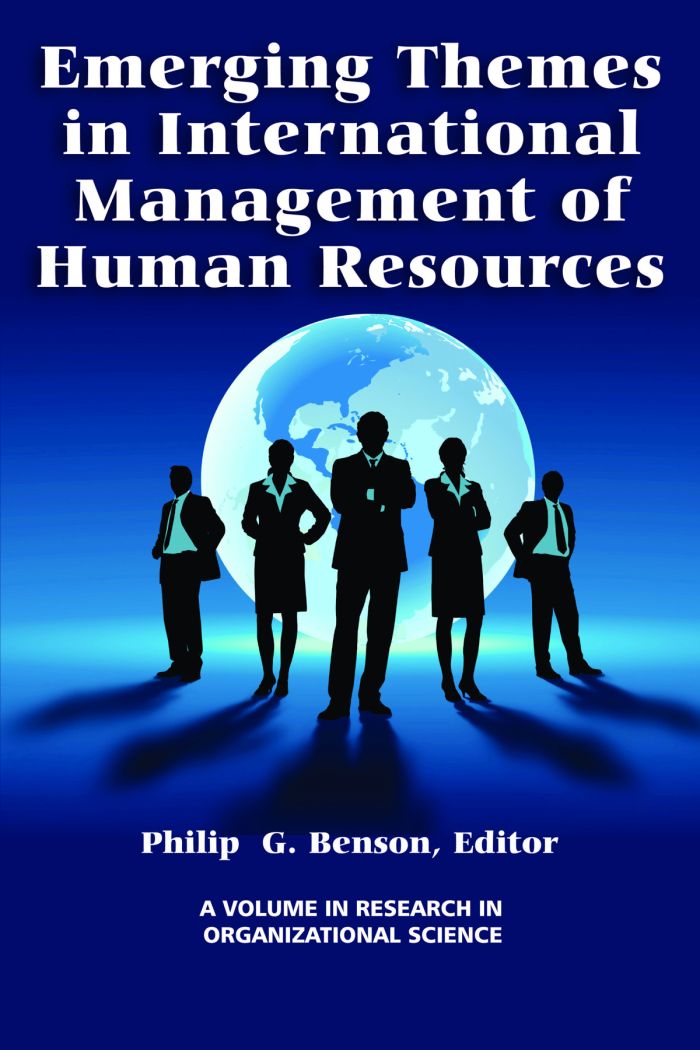
Emerging Themes in International Management of Human Resources

This book can be opened with

Note on our eBooks and Audiobooks: you can read our eBooks (ePUB or PDF) and listen to audiobooks on the free Emerald Books app on iOS, Android, and desktop. Or read and listen on Emerald's online reader (ePUB eBooks and audiobooks only). To purchase a digital book you will need to create an account if you don’t already have one. After purchasing you will receive instructions on how to get started.
- Description
- Contents
Emerging Themes in International Management of Human Resources is the third volume in the Research in Organizational Analysis series. This volume investigates important human resource management (HRM) issues within an international context. The papers in this volume provide insight into several HRM areas.
First, the international context’s effects on management knowledge transfer; privatization of traditionally governmental services; and the relation between social capital and organizational diversity is considered. The second part of this volume is concerned with the issue of staffing in international organizations with special emphasis on HRM selection and termination practices for the cross-national company. Third, women’s issues in the international firm are explored. Gender issues such as flexible work arrangements and the role of culturally defined gender egalitarian values on role differences among women and men managers are investigated. Finally, the volume explores the issues of expatriation and repatriation among firms. The role of psychological contracts in supporting successful expatriate experiences; how repatriate support practices influence repatriate organizational commitment; turnover intentions; and career success; and an investigation of repatriation as sense making process are discussed.
This volume provides a good basis for understanding how HRM practices are affected by cross-cultural differences and provides insight into best HRM practices for the international organization.
Introduction: The Emerging View: Managing Human Resources in the International Firm of the Twenty-First Century; Philip G. Benson.
- Part I. The Context of International Human Resource Management.
- Chapter 1. Enhancing Absorptive Capacity and Management Knowledge Transfer Through Host Country Workforce Training: Lessons From Sacagawea and Squanto; Charles M. Vance.
- Chapter 2. Telecommunications Deregulation and Privatization in the Czech Republic and Australia: A Comparative Study of Česky Telecom and Telstra; Peter Ross.
- Chapter 3. Traversing the Societal-Organizational Cultural Divide: Social Capital and Organizational Diversity in the United States and the European Union; Judith Y. Weisinger.
- Part II. Staffing in the International Organization.
- Chapter 4. Individual Value Orientations and the Selection of Suitable Cross-Border Managers; Alan Fish, Ramudu Bhanugopan, and Julie Cogin.
- Chapter 5. Factors Influencing Employee Claiming Behavior in Relation to the Termination of Employment: Evidence From Europe; Colette Darcy and Thomas N. Garavan.
- Part III. Women's Issues in the International Firm.
- Chapter 6. Women's Intentions and Flexible Work Arrangements: Evidence From the Far South-Eastern Corner of the EU; Christiana Ierodiakonou and Eleni Stavrou.
- Chapter 7. Gender Egalitarian Values, Institutional Equalization, and Role Differences Among Female and Male HR Managers; Astrid Reichel, Julia Brandl, and Wolfgang Mayrhofer.
- Part IV. Crossing Cultures: Issues in Expatriation and Repatriation.
- Chapter 8. Governance of Psychological Contracts via Reciprocity: The Case of International Expatriation Management; Maike Andresen and Markus Göbel.
- Chapter 9. Do Repatriate Support Practices Influence Repatriate Experience, Organizational Commitment, Turnover Intentions, and Perceptions of Career Success? Jane L. Menzies and Ann Lawrence.
- Chapter 10. Repatriation as a Dynamic Sense-Making Process; Gráinne Kelly and Michael J. Morley.
- About the Authors.