
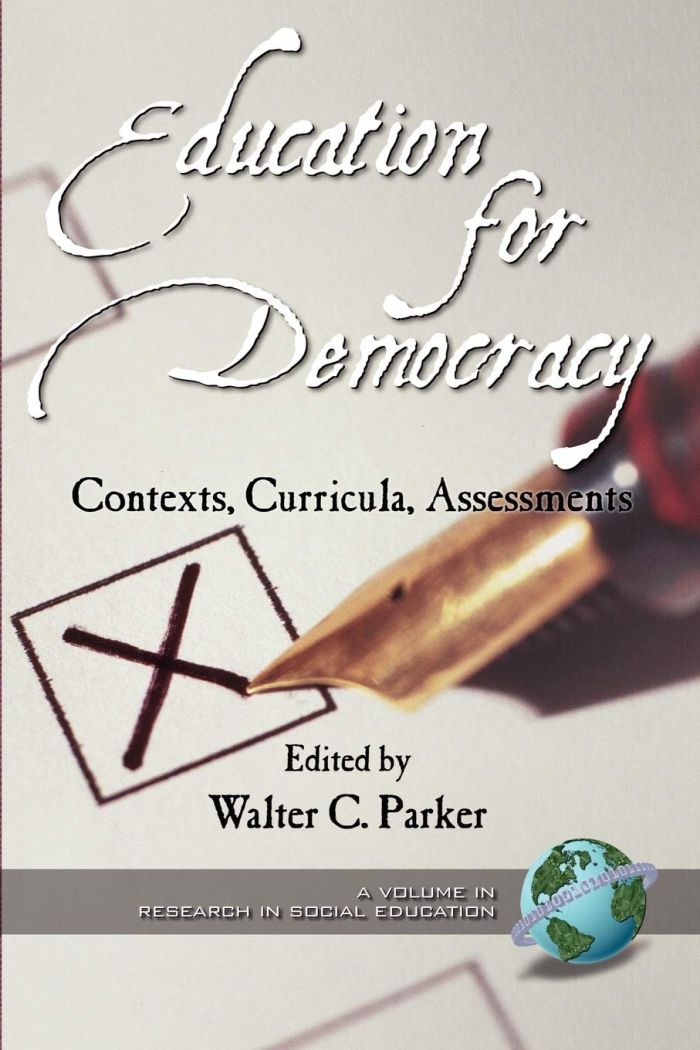
Education for Democracy
Contexts, Curricula, Assessments

Emerald
This book can be opened with

Note on our eBooks and Audiobooks: you can read our eBooks (ePUB or PDF) and listen to audiobooks on the free Emerald Books app on iOS, Android, and desktop. Or read and listen on Emerald's online reader (ePUB eBooks and audiobooks only). To purchase a digital book you will need to create an account if you don’t already have one. After purchasing you will receive instructions on how to get started.
- Description
- Contents
Part of the "Research in Social Education" series, this text is divided into three parts: contexts; curricula; and assessments. It covers such topics as the irony of exclusion; teaching tolerance; and multicultural citizenship education.
Introduction; Walter C. Parker
- Part I. Contexts.
- Chapter 1. Democratic Education and the American Dream: One, Some, and All; Jennifer Hochschild and Nathan Scovronick
- Chapter 2. Citizenship Education: Anti-Political Culture and Political Education in Britain; Elizabeth Frazer
- Chapter 3. The Irony of Exclusion: Education in Seattle During the Japanese American Incarceration; Yoon K. Pak
- Part II. Curricula.
- Chapter 4. Education for Democratic Citizenship: One Nation's Story; Carole Hahn
- Chapter 5. Issue-Centered Education for Democracy through Project Citizen; John J. Patrick & William A. Nixon
- Chapter 6. Political Tolerance and Democracy; Patricia G. Avery
- Chapter 7. Multicultural Citizenship Education; James A. Banks
- Chapter 8. Educating World Citizens: Toward Multinational Curriculum Development; Walter C. Parker, Akira Ninomiya, John Cogan
- Part III. Assessments.
- Chapter 9. An Assessment of What 14-year-olds Know and Believe About Democracy in 28 Countries; Judith Torney-Purta and Wendy Klandl Richardson
- Chapter 10. Classroom Assessment of Civic Discourse; David Harris