
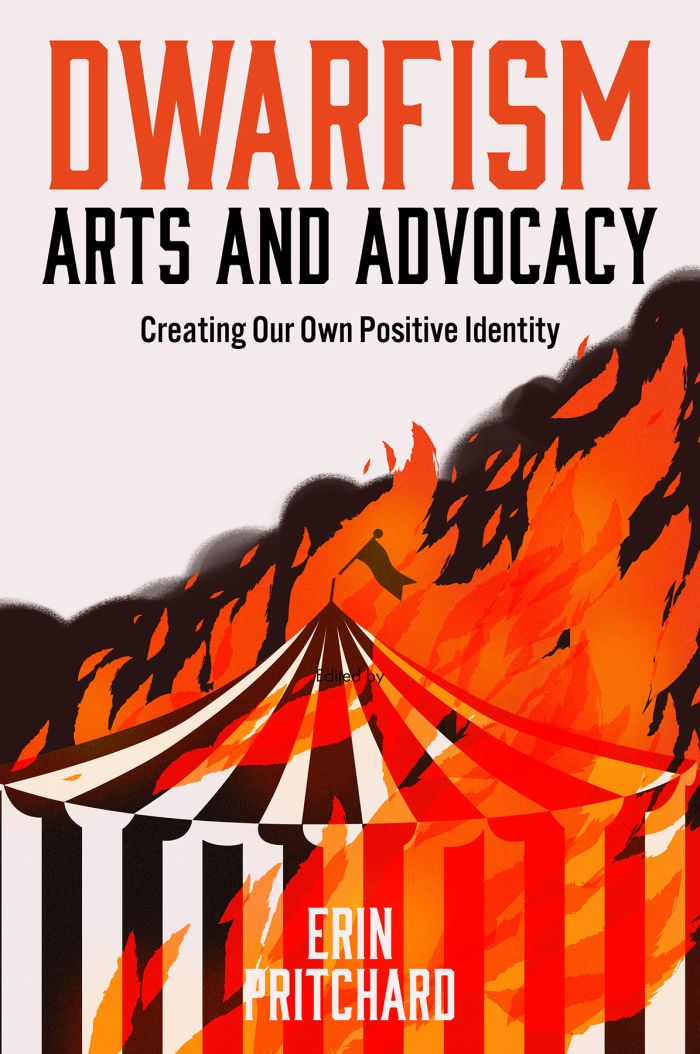

Dwarfism Arts and Advocacy
Creating Our Own Positive Identity

This book can be opened with

Note on our eBooks and Audiobooks: you can read our eBooks (ePUB or PDF) and listen to audiobooks on the free Emerald Books app on iOS, Android, and desktop. Or read and listen on Emerald's online reader (ePUB eBooks and audiobooks only). To purchase a digital book you will need to create an account if you don’t already have one. After purchasing you will receive instructions on how to get started.
- Description
- Contents
- Reviews
- About
When you think of a person with dwarfism, what image springs to mind? Now, hold onto that image and consider how you are expected to respond to it. Is your response laughter, amusement or maybe curiosity? Do you even see them as human, or just a novelty for the entertainment of others?
Rectifying the lack of representation of dwarfism in Disability arts, Dwarfism Arts and Advocacy brings together leading activists, both academics and arts practitioners with lived experience of dwarfism, to raise awareness within academia and society and challenge ableist representations of people with dwarfism. Raising a collective voice, authors offer their thoughts, experiences and, most importantly, recommendations for improving representations of dwarfism and counteracting ableist attitudes both in popular media and in everyday life.
Disputing derogatory representations of this condition, Dwarfism Arts and Advocacy opens up a new avenue for disability studies, encouraging advocacy and challenging able-bodied readers to re-examine their perceptions of this community.
Introduction; Erin Pritchard
- Chapter 1. Curating New Perspectives: How My Dwarfism Led Me to Disability Art; Amanda Cachia
- Chapter 2. Little Big Women: Condescension - Sculpting the Oppositional Gaze; Debra Keenahan
- Chapter 3. Where are the Creative Opportunities for People with Dwarfism Lived Experience in Participatory Arts Funding?; Steph Robson
- Chapter 4. It's Behind You: How Equity and an Education Made Me More than Just a Suit Filler; Alice Lambert and Erin Pritchard
- Chapter 5. Midgitte Bardot: Using drag performance to challenge people’s perceptions and attitudes of dwarfism; Tam Reynolds and Erin Pritchard
- Chapter 6. The Path to Success is Long and Winding: Challenging Stereotypes and Fighting for Disability Equality in the Entertainment Industry; Danny Woodburn and Erin Pritchard
- Chapter 7. Get The Balance Right: The Change in How People with Dwarfism are Depicted from Limited, Damaging and Negative to Realistic, Creative and Positive; Simon Minty
- Chapter 8. Creating Our Own Path: The Easterseals Disability Film Challenge; Nic Novicki and Erin Pritchard
- Chapter 9. Dwarfism Advocacy: A Life Tenure; Angela Muir Van Etten
- Chapter 10. Exploring Dwarfism Representation in Social Media: Intentionality and Advocacy as a Digital Content Creator; Kara B. Ayers
- Chapter 11. Podcasts as a Platform for Advocacy; Jillian Curwin
- Chapter 12. The Patchwork Representation We Too Often Miss; Sam Drummond
- Chapter 13. “Would You Befriend Me, Date Me, Hire Me If I Hadn’t Had My Bones Broken & Stretched to Look More Like Yours?”; Emily Sullivan Sanford
- Epilogue; Erin Pritchard
With an unequivocal commitment to the creation of new insights which challenge the dynamics of disablism, this collection provides a rare assemblage of insider knowledge on dwarfism, identity, and the arts. Rooted firmly in the initial principles of Disability Studies, with its centering of disabled people’s situated knowledges, whilst benefitting from more recent developments in Cultural Disability Studies, Pritchard, a leading figure in studies of dwarfism, has gathered the stories and arguments of an extensive range of people with dwarfism. All these contributors are well-positioned to provide a diverse body of accounts relating to dwarfism, setting personal aspects of life within wider social and cultural structures and contexts. All, together, this wide range of threads weave a rich tapestry, making a compelling statement for change in arts practice and wider cultural attitudes to dwarfism.
Dwarfism Arts and Advocacy finally gives voice to the challenges of navigating the entertainment world as an artist with dwarfism. Whether it be in film, television, visual arts or art education, the authors of this collective share insights into the myriad of obstacles that stand in the way of forging a dignified artistic path in an ableist space. Every artist struggles with identity, individuality, and inconceivable odds. However, these artists explain in such vulnerable detail, the challenge of trying to destabilise the historical narrative of the dwarf in art and culture. It’s not a pretty past. And the struggle to create new imagery, representation and dignity against centuries of ridicule and contempt is powerful. This is a must read for anyone who believes in the expansion of voices and perspectives in the art world.
The chapters in this book represent a wide range of voices from artists, performers, writers, advocates, and across diverse platforms including podcasters and bloggers, all within the dwarfism community from around the world. Each contributor shares their view and experience in relation to the challenges, frustrations, and barriers they have faced from society and portrayed within the arts, media, and film industries, each advocating for societal change to challenge the attitudes associated with dwarfism within the arts and media. It's evident that this book aims to bring crucial awareness and understanding to the challenges faced by individuals with dwarfism in life as well as in various industries, particularly in the arts, media, and film. By amplifying their voices and experiences this book has the potential to spark meaningful conversations and drive positive change in how dwarfism is represented and perceived in society. […] Whether you’re a person with dwarfism, friend or family member or a member of the wider community, whoever you are you will benefit from the insights and perspectives shared within these pages. This book is not just an educational resource it’s a “call to action” for recognition of the need for greater inclusion, acknowledgement, and true-life representation of people with dwarfism across the arts, media, and film industries.
Erin Pritchard is Senior Lecturer in Disability Studies and Core Member of the Centre for Culture and Disability Studies at Liverpool Hope University. She also acts as a consultant to Walt Disney Productions regarding representations of dwarfism.