
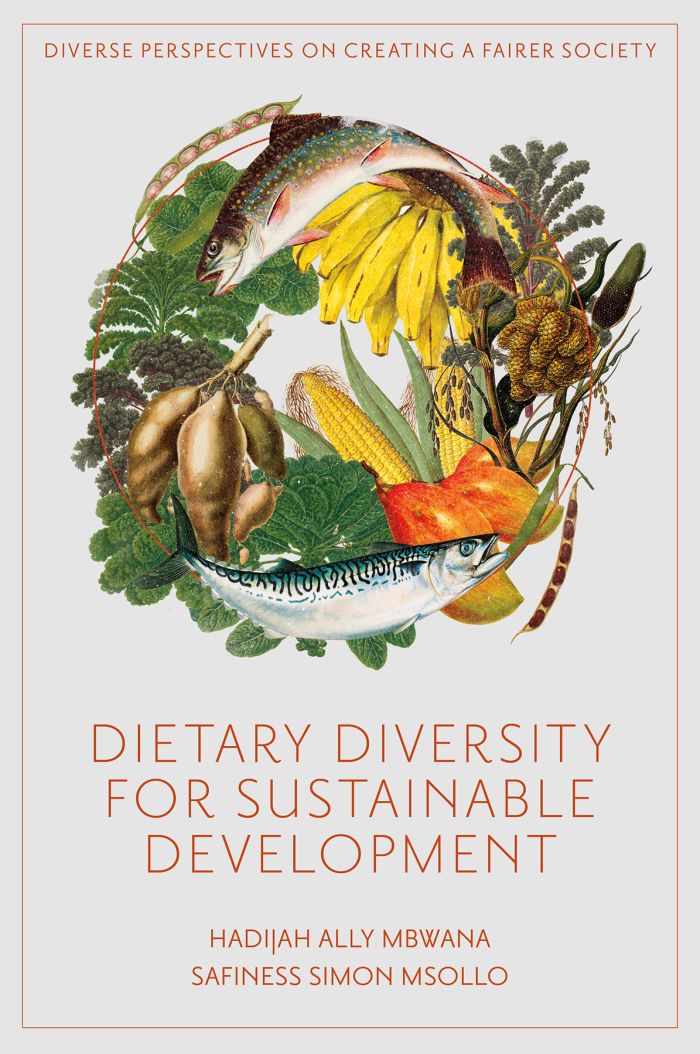

Dietary Diversity for Sustainable Development
Local-Global Policy Lessons from Tanzania

This book can be opened with

Note on our eBooks and Audiobooks: you can read our eBooks (ePUB or PDF) and listen to audiobooks on the free Emerald Books app on iOS, Android, and desktop. Or read and listen on Emerald's online reader (ePUB eBooks and audiobooks only). To purchase a digital book you will need to create an account if you don’t already have one. After purchasing you will receive instructions on how to get started.
- Description
- Contents
- About
There is an urgent need for nutrition-sensitive interventions in the face of rising malnutrition, food insecurity, and climate change. As global initiatives such as the Sustainable Development Goals (SDGs) emphasize dietary diversity as a pathway to achieving better health, food security, and gender equity, this study examines the prevalence, determinants, and broader implications of dietary diversity in low-resource settings, offering a nuanced perspective that integrates global health and sustainable development frameworks.
Grounded in empirical research from rural Tanzania, Dietary Diversity for Sustainable Development delves into the crucial intersection of food systems, culture, gender, and nutrition, highlighting actionable strategies for improving nutritional outcomes among women of reproductive age. By employing a culturally sensitive approach and leveraging context-specific data, the authors present practical recommendations for improving nutrition within rural communities which foregrounds women’s nutritional challenges, links local insights to global imperatives, and offers replicable strategies for improving diet quality in similar low-resource settings.
Bridging the gap between policy discourse and on-the-ground realities, Dietary Diversity for Sustainable Development provides a groundbreaking analysis of dietary diversity as both an indicator and a driver of sustainable development. Essential for researchers, policymakers, and practitioners, this book contributes valuable evidence-based perspectives on sustainable food systems and development.
PART I. UNDERSTANDING DIETARY DIVERSITY
- Chapter 1. The science of dietary diversity: Definitions, metrics, and global benchmark
- Chapter 2. The link between dietary diversity and health outcomes
- Chapter 3. Socioeconomic and cultural determinants of dietary diversity
- PART II. CASE STUDY FROM RURAL TANZANIA
- Chapter 4. Context, methods, and key results
- Chapter 5. Voices from the field: Qualitative insights from Tanzanian women
- PART III. IMPLICATIONS FOR DEVELOPMENT AND POLICY
- Chapter 6. Strategies to enhance dietary diversity
- Chapter 7. Gender, nutrition, and development policy
- Chapter 8. Lessons learned and scaling up best practices
- Chapter 9. Scaling lessons learned: From Tanzania to global applications
Hadijah Ally Mbwana is Senior Researcher and Lecturer in the Department of Human Nutrition and Consumer Sciences at Sokoine University of Agriculture (SUA) in Tanzania. She does research in community nutrition, promotion of production and consumption of nutritious local foods, dietary practices and patterns of vulnerable groups to mitigate hunger and malnutrition.
Safiness Simon Msollo is a Lecturer at Sokoine University of Agriculture, Tanzania, specializing in public health nutrition, food security, and non-communicable disease prevention. Dr Msollo collaborates with international organizations and government agencies, providing expertise in policy development, nutrition education, and community health interventions.