
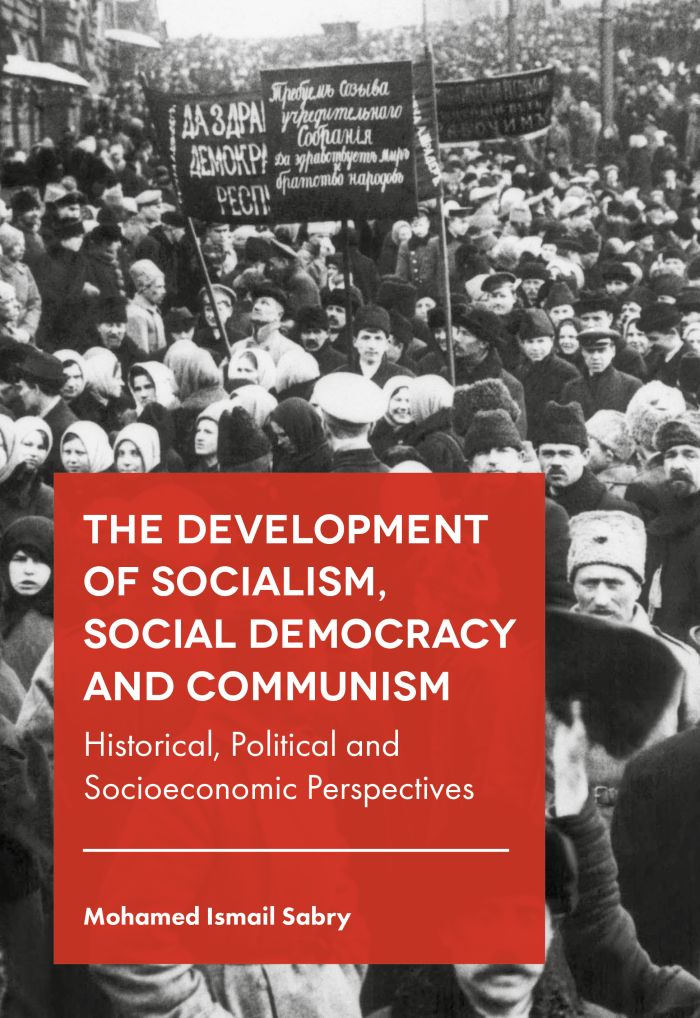

The Development of Socialism, Social Democracy and Communism

Historical, Political and Socioeconomic Perspectives

Mohamed Ismail Sabry
Emerald
Emerald

This book can be opened with

Glassboxx eBooks and audiobooks can be opened on phones, tablets, iOS and Android devices

Hardback
9781787433748
01 September 2017
$135.99
eBook (PDF)
9781787433731
01 September 2017
$135.99
eBook (ePub)
9781787434578
01 September 2017
$135.99

Note on our eBooks and Audiobooks: you can read our eBooks (ePUB or PDF) and listen to audiobooks on the free Emerald Books app on iOS, Android, and desktop. Or read and listen on Emerald's online reader (ePUB eBooks and audiobooks only). To purchase a digital book you will need to create an account if you don’t already have one. After purchasing you will receive instructions on how to get started.

  • Description
  • Contents
  • Reviews
  • About
This book examines how socioeconomic and institutional factors shaped the development of Socialism and its two contending variants of Social Democracy and Communism, investigating why each of these factions enjoyed varying levels of popularity in different societies between 1840 and 1945. It places a special focus on a number of factors including: inequality; industrialization; urbanization; political freedoms; literacy and education; national sentiments; ethnic fractionalization and other cultural factors. 

This important study offers a detailed and thorough analysis combining theory, empirical data and a number of important case studies reflecting the different dimensions of Socialism. It offers perspectives on the strength or lack thereof of Social Democracy and Communism during this period across a number of countries, including, Russia, Germany, Sweden, Britain, France, the United States, China, Mexico and many more. 

The work’s multi-faceted approach provides a rich and thorough analysis of Socialism during this period with new and valuable insights stemming from its unique combination of historic analysis, political theory and institutional economics.

Chapter 1. Socialism and the World (1848-1945)  Chapter 2. Institutions, Socioeconomic Factors and Ideological Choices: Towards a Theoretical Perspective Chapter 3. The Bastion of Communism: The Case of Russia Chapter 4. Germany Chapter 5. Other World Cases Chapter 6. Conclusion

    Though both Socialism and Communism originated in the thought of Karl Marx, says Sabry, the two movements saw different paths to the Utopian Communist stage of society—Socialism working through democratic processes both internally and externally, and Communism, or Marxism-Leninism establishing a centralized and highly hierarchical party structure and inclining toward insurrection and revolution. He traces the rise and interaction of the two from Marx's death in the 1880's to the end of World War II in 1945 in Germany, Russia, and other cases.

    - Annotation ©2017
    Mohamed Ismail Sabry is a Postdoctoral Researcher at University of Bremen, Germany. He holds a PhD in Economics from Philipps University of Marburg, Germany. He has worked as a lecturer and teaching assistant in a number of German and Egyptian universities and previously worked as a project assistant for a United Nations Development Programme (UNDP) project in Cairo.