
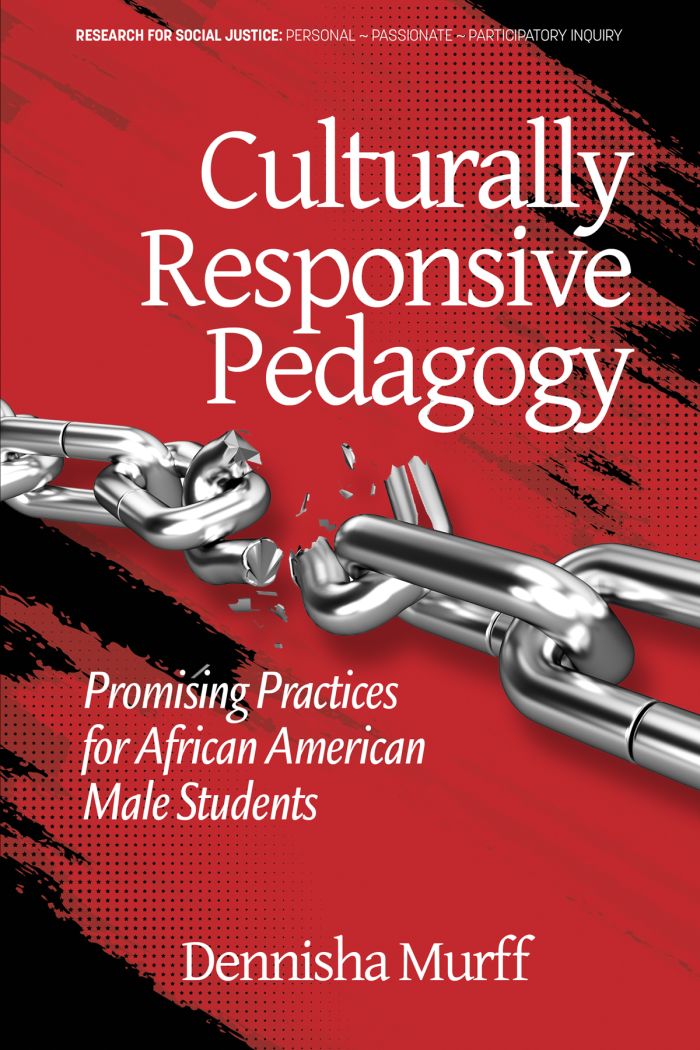
Culturally Responsive Pedagogy
Promising Practices for African American Male Students

This book can be opened with

Note on our eBooks and Audiobooks: you can read our eBooks (ePUB or PDF) and listen to audiobooks on the free Emerald Books app on iOS, Android, and desktop. Or read and listen on Emerald's online reader (ePUB eBooks and audiobooks only). To purchase a digital book you will need to create an account if you don’t already have one. After purchasing you will receive instructions on how to get started.
- Description
- Contents
In Culturally Responsive Pedagogy: Promising Practices for African American Male Students, I take us on a journey into teachers’ perceptions of the impact of implementing culturally responsive pedagogical (CRP) practices on the student learning outcomes of African American male students. The book also helps to identify teachers’ perceptions of the CRP strategies needed in the elementary school setting to address the diverse needs of African American male students. I share the story of educators from a large, diverse elementary school in an urban school district, who have made it their mission to provide African American male students with culturally responsive learning environments where they can thrive. Throughout the book, I make it clear that the implementation of CRP practices has a direct impact on the student learning outcomes of African American male students.
The book provides additional research into the existing literature on CRP practices. Through a case study approach, my work allows for additional insight into the potential impact of CRP practices on the student learning outcomes of African American male students in an urban elementary school setting. The book takes us on a journey of highs and lows, ups and downs, and failures and successes. Throughout the book, rich, detailed stories and descriptions are shared based on classroom observations, interviews, and student learning outcomes collected from three elementary school teachers from diverse backgrounds and various years of experience. Classroom observations were conducted using the Culturally Responsive Instruction Observation Protocol™ (CRIOP) instrument to assess the practices being implemented in the classroom. As I focused on the hard realities that face African American male students in today’s classrooms, I identified six emerging themes, including one overarching emerging theme, and three promising practices that surfaced during my research. The CRP practices implemented proved helpful toward increasing learning outcomes for African American male students, and, ultimately, closing the achievement gap.
As an African American educator, I have been able to see how the lack of culturally responsive practices creates learning obstacles for African American male students. These learning obstacles continue to plague a group that has been historically marginalized in our society. The implementation of CRP practices provides educators with an avenue to remedy a social justice issue that has plagued our nation for years. The information shared in this book can be beneficial for all those invested in closing the achievement gap and increasing student learning outcomes through the use of culturally responsive practices, including pre-service and in-service teachers, administrators, caregivers, community advocates, educational researchers, and policy makers.
Series Foreword: Research for Social Justice: Personal~Passionate~Participatory Inquiry.
- Foreword.
- Acknowledgments.
- Preface.
- List of Tables.
- List of Figures.
- Chapter 1. Achievement Gap and the Need for Culturally Responsive Pedagogy.
- Chapter 2. What is Culturally Responsive Pedagogy?
- Chapter 3. Neverland Elementary School's Journey.
- Chapter 4. Promising Practices for African American Male Students.
- Chapter 5. Endless Possibilities.
- Afterword: A Letter to My African American Sons.
- Definitions of Terms.
- References.