
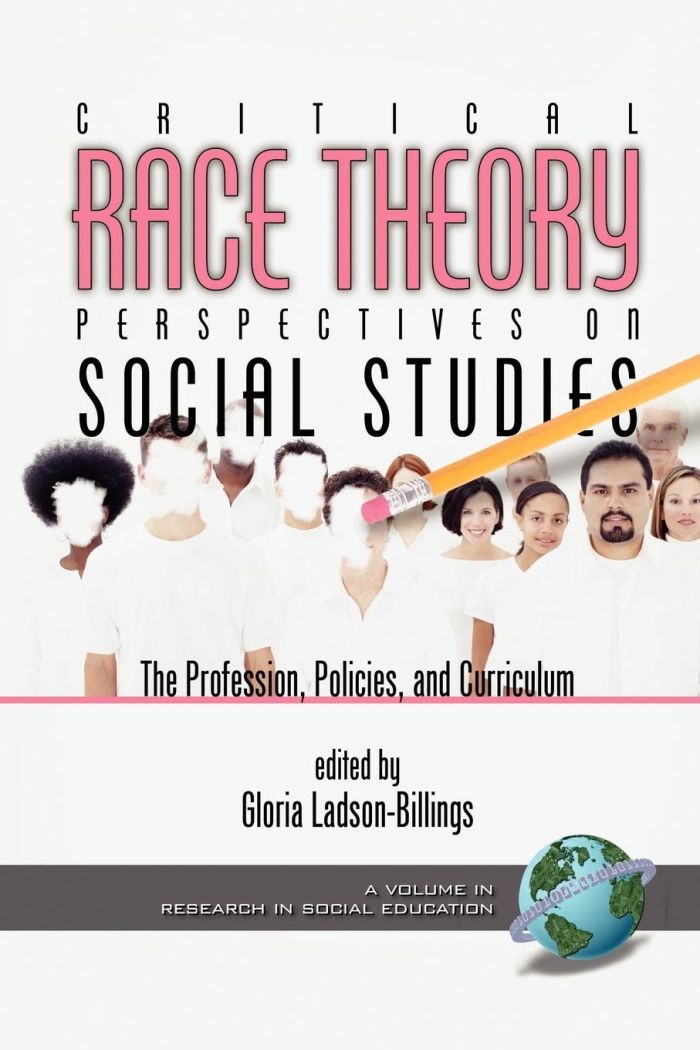
Critical Race Theory Perspectives on the Social Studies
The Profession, Policies, and Curriculum

This book can be opened with

Note on our eBooks and Audiobooks: you can read our eBooks (ePUB or PDF) and listen to audiobooks on the free Emerald Books app on iOS, Android, and desktop. Or read and listen on Emerald's online reader (ePUB eBooks and audiobooks only). To purchase a digital book you will need to create an account if you don’t already have one. After purchasing you will receive instructions on how to get started.
- Description
- Contents
Fourteen American and Canadian academics contribute 13 chapters placing race at the center of an understanding of social studies practices in education. They consider ways the curriculum, profession, policies, and the current embrace of technology conform to a racial script which makes race invisible. By using critical race theory for their analyses, they prevent readers from turning to other factors to explain the ongoing inequities in schools and the society, and direct educators to recognize the gap between what is taught in the classroom and the real lives of the students attending schools.
Introduction; Gloria Ladson-Billings.
- Part I. The Profession.
- Chapter 1. A Bridge Over Troubled Water: Social Studies, Civic Education and Critical Race Theory; Cynthia A. Tyson.
- Chapter 2. The Dis(G)race of the Social Studies: The Need for Racial Dialogue in the Social Studies; Tyrone Howard.
- Chapter 3. From Liberal Teacher to Liberated Teacher Educator: A Reflection on My Journey Through the Profession; Ceola Ross Baber.
- Part II. The Policies.
- Chapter 4. The Persistent Deracialization of the Agenda for Democratic Citizenship Education: Twenty Years of Rhetoric and Unreality in Social Studies Position Statements; Patricia L. Marshall.
- Chapter 5. A Look at Race in the National Standards for the Social Studies: Another Bad Check; André Branch.
- Part III. The Curriculum.
- Chapter 6. Deracialization in Social Studies Teacher Education Textbooks; Geneva Gay.
- Chapter 7. Uneasy Similarities, Uneven Parallels: Race, Sexuality and Civil Rights Discourses.
- Lisa Loutzenheiser.
- Chapter 8. To Greet the Dawn with Open Eyes: American Indians, White Privilege and the Power of Residual Guilt in the Social Studies; Frances V. Rains.
- Part IV. The Technology.
- Chapter 9. Learning from Black Folk(s): Race, Technology, and Society; Jamel Donnor.
- Chapter 10. Social Studies, Race, and the World Wide Web; Anand Marri.
- Chapter 11. Technology, Race-Consciousness and the Oppressor: A Plea for the Performative; Michael J. Zambon.