
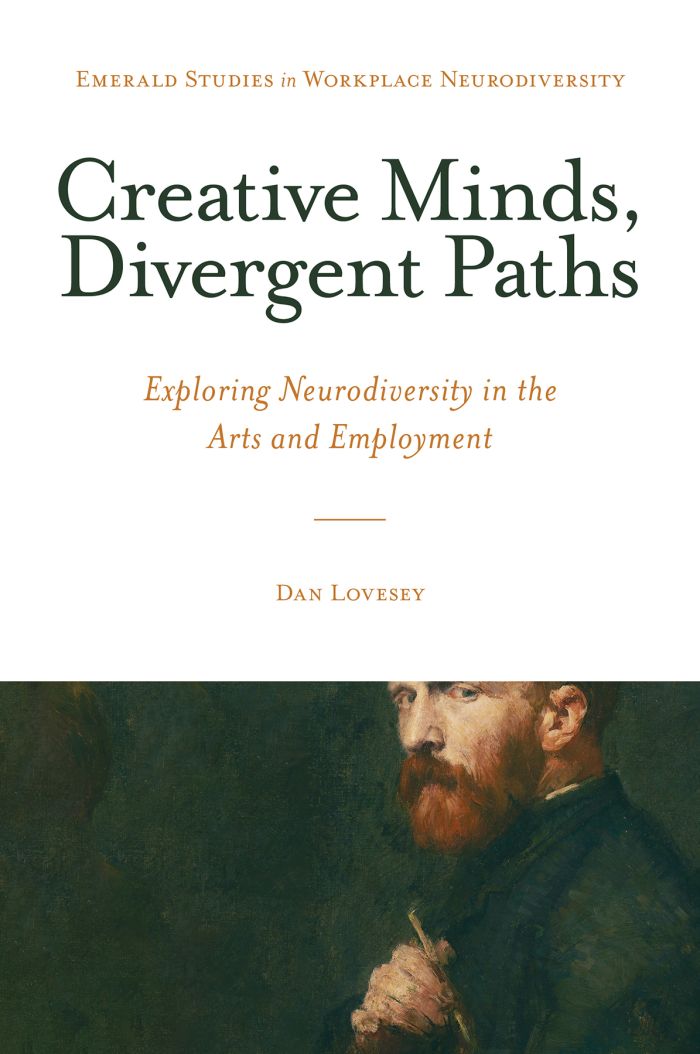
Creative Minds, Divergent Paths
Exploring Neurodiversity in the Arts and Employment

This book can be opened with

Note on our eBooks and Audiobooks: you can read our eBooks (ePUB or PDF) and listen to audiobooks on the free Emerald Books app on iOS, Android, and desktop. Or read and listen on Emerald's online reader (ePUB eBooks and audiobooks only). To purchase a digital book you will need to create an account if you don’t already have one. After purchasing you will receive instructions on how to get started.
- Description
- Contents
- Reviews
- About
Neurodivergent individuals frequently face distinct challenges within creative fields such as music, literature, performance, media, and the visual arts. Recognising how their experiences intersect with creative expression and employment is essential, not only to support individual potential but also to expand our understanding of inclusivity in these fields. The perspectives of neurodivergent creatives bring valuable insights into the often-hidden challenges and strengths within a set of industries driven by innovation and diversity.
Creative Minds, Divergent Paths delves into the intricate relationship between neurodivergence and the creative industries, asking whether these individuals should be seen as “neurodivergent creatives” or “creative neurodivergents.” Through a blend of literature critique and original research, this work explores employment in the music and literary industries as well as in performance, media, and the visual arts. Lovesey incorporates lived experiences to reveal the tensions and potentials within creative fields, considering how these industries can be more inclusive. The study also examines the precarity of employment in creative sectors, as well as academia, where short-term work arrangements impact neurodivergent individuals’ stability and success. By examining stereotypes, definitions, and individual experiences, this work ultimately advocates for a democratic and community-driven approach to neurodiversity.
Presenting a rich resource for scholars, creative professionals, and anyone invested in understanding the intersection of neurodiversity and creativity, the book invites readers to reimagine inclusivity in the arts and employment. Ultimately, using the creative industries as the means for shaping new narratives of neurodivergence, by neurodivergent creatives.
Chapter 1. Neurodivergence and Creativity
- Chapter 2. Neurodivergence and the Music Industry
- Chapter 3. Neurodivergence and Literature
- Chapter 4. Neurodivergence in Acting and Performance
- Chapter 5. Neurodivergence in the Media Industry
- Chapter 6. Neurodivergence and Art
- Chapter 7. Neurodivergent and Creative?
- Chapter 8. Reimagining the Neurodivergent Creative
- Chapter 9. Shaping the Next Generation
- Chapter10. Bringing it Together
- Chapter 11. Epilogue
He has an uncanny ability to unlock different perspectives for students across a wide range of subjects from the academic to the practical.
Dan Lovesey is an autistic researcher, academic and creative, who is part of the disability and inclusion team at The University of Law, UK.