
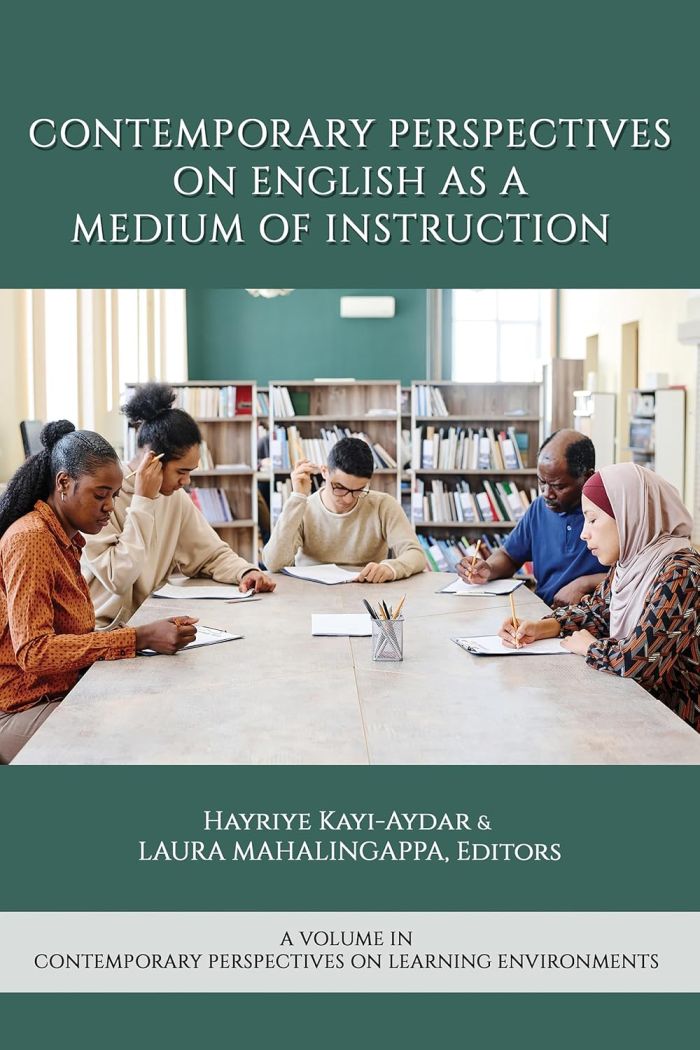
Contemporary Perspectives on English as a Medium of Instruction

This book can be opened with

Note on our eBooks and Audiobooks: you can read our eBooks (ePUB or PDF) and listen to audiobooks on the free Emerald Books app on iOS, Android, and desktop. Or read and listen on Emerald's online reader (ePUB eBooks and audiobooks only). To purchase a digital book you will need to create an account if you don’t already have one. After purchasing you will receive instructions on how to get started.
- Description
- Contents
English Medium Instruction (EMI) is the use of English to teach academic content in countries where English is not the first language. There continues to be a rapid growth in EMI around the globe and there is often official government support for EMI programs or curriculum.
The goal of this volume is to explore current perspectives on EMI from empirical data to theoretical considerations in order to identify strengths and shortcomings of EMI programs and/or curricula, defining ideologies, and dominant methodologies in diverse contexts and offer evidence-based implications for classroom practice, policy, and future research. The chapters reflect the voices of diverse groups of people (e.g., content instructors, classroom teachers, college students, parents, teacher educators, etc.) who experience EMI in their current educational environments in different countries.
Acknowledgments.
- Introduction; Hayriye Kayi-Aydar and Laura Mahalingappa.
- Chapter 1. Content Instructors' Views on English and Collaboration in EMI: A Discipline-Based Analysis; Dogan Yuksel and Mehmet Altay.
- Chapter 2. The Linguistic Background, Histories, and Experience of EMI Students in an Italian University; Francesca Costa and Cristina Mariotti.
- Chapter 3. Language Ideologies and the Use of Mother Tongues as the Medium of Instruction and Learning in Namibian Junior Primary Schools: A Case Study; Kelvin Mubiana Katukula, Beatha Set, and John Nyambe.
- Chapter 4. Reconceptualizing the E in EMI in Higher Education: Toward English-Within-Multilingualism as a Medium of Instruction; Tomokazu Ishikawa.
- Chapter 5. English as a Medium of Instruction and Translingual Practices: Reality Versus Dream for South Asian Education System? Shaila Sultana.
- Chapter 6. From Dejima to Sustainable Enclaves of Internationalization: Reframing English-Medium Instruction Programs in Japan; Howard Brown and Annette Bradford.
- Chapter 7. Developing Evaluative Standards for English Medium Instruction in Transnational Higher Education Partnerships; Kate Shea.
- Chapter 8. Curriculum Design for EMI Professional Development in Higher Education; Kerry Pusey.
- Chapter 9. English as Medium of Instruction at Brazilian Universities: Current Challenges and Future Directions; Camila Höfling and Luciana C. de Oliveira.
- Conclusion; Hayriye Kayi-Aydar and Laura Mahalingappa.
- Biographies.