
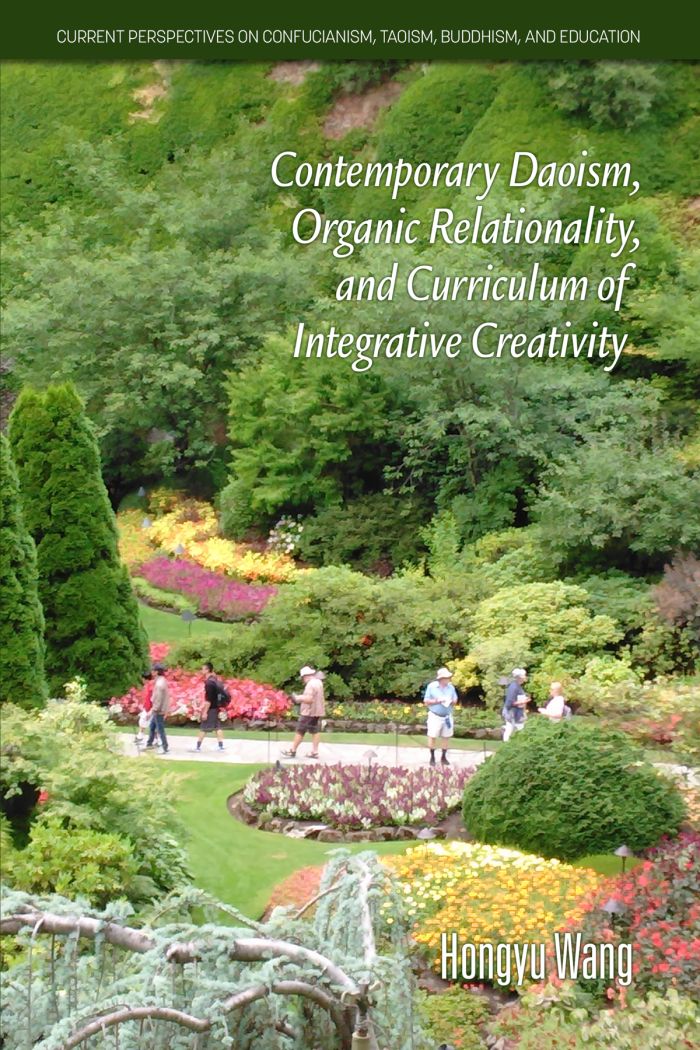
Contemporary Daoism, Organic Relationality, and Curriculum of Integrative Creativity

This book can be opened with

Note on our eBooks and Audiobooks: you can read our eBooks (ePUB or PDF) and listen to audiobooks on the free Emerald Books app on iOS, Android, and desktop. Or read and listen on Emerald's online reader (ePUB eBooks and audiobooks only). To purchase a digital book you will need to create an account if you don’t already have one. After purchasing you will receive instructions on how to get started.
- Description
- Contents
Creativity in the West is often perceived as 'cutting edge' and 'ground-breaking' in a singular act of giving birth to the new. However, to what degree has this model of breaking away from others and the world contributed to the current crisis in education, society, and ecology even before the tragic COVID-19 pandemic and responses to it? How can our reimagining of creativity contribute to the mutual flourishing of humanity and of relations between humans and the planet? Daoist creativity, based upon relationality and interdependence, has much to offer to today’s curriculum as a complicated conversation to sustain life and renew the world. Integrative, emergent, embodied, co-creative, and ecological, Daoist creativity has a built-in opening to difference through the organic relationality of Yin/Yang dynamics.
This book focuses on one essential thread in Daoism—integrative creativity through organic relationality—and weaves its interplay with Western thought through multiple and intertwined dimensions of curriculum. Exploring Dao as dynamic and setting creative curriculum in motion, this book juxtaposes the notion of Wuwei and self-organization to conceptualize emergent classroom dynamics, and re-envisions the inner landscape of education through negotiating dialogues between the Jungian psyche and Daoist dynamics. Further, it explores gendered implications of Daoism to interact with feminism and formulates the pursuit of inner and outer peace through creative harmony to inform nonviolence curriculum. Synthesizing cross-cultural insights and wisdom, it provides an in-depth and intuitive understanding of the interactions between Daoist and Western creativity and elaborates a curriculum of integrative creativity for students, teachers, and their educational community. Let us all attend to the urgent call for individual and collective awakenings and for creativity that connects.
Introduction.
- Acknowledgments.
- Chapter 1. Dynamic Dao and the Creative Pathways of Curriculum.
- Chapter 2. Wuwei, Self-Organization, and Classroom Dynamics.
- Chapter 3. The Jungian Transcendent Function, the Dance of Dao, and the Inner Landscape of Education.
- Chapter 4. Original and Sustainable Creativity: Gender and Curriculum.
- Chapter 5. Relational Creativity and Peace Curriculum.
- Chapter 6. Integrative Creativity Reimagined.
- Chapter 7. Curriculum of Integrative Creativity.
- References.
- About the Author.