
College Student-Athletes

This book can be opened with

Note on our eBooks and Audiobooks: you can read our eBooks (ePUB or PDF) and listen to audiobooks on the free Emerald Books app on iOS, Android, and desktop. Or read and listen on Emerald's online reader (ePUB eBooks and audiobooks only). To purchase a digital book you will need to create an account if you don’t already have one. After purchasing you will receive instructions on how to get started.
- Description
- Contents
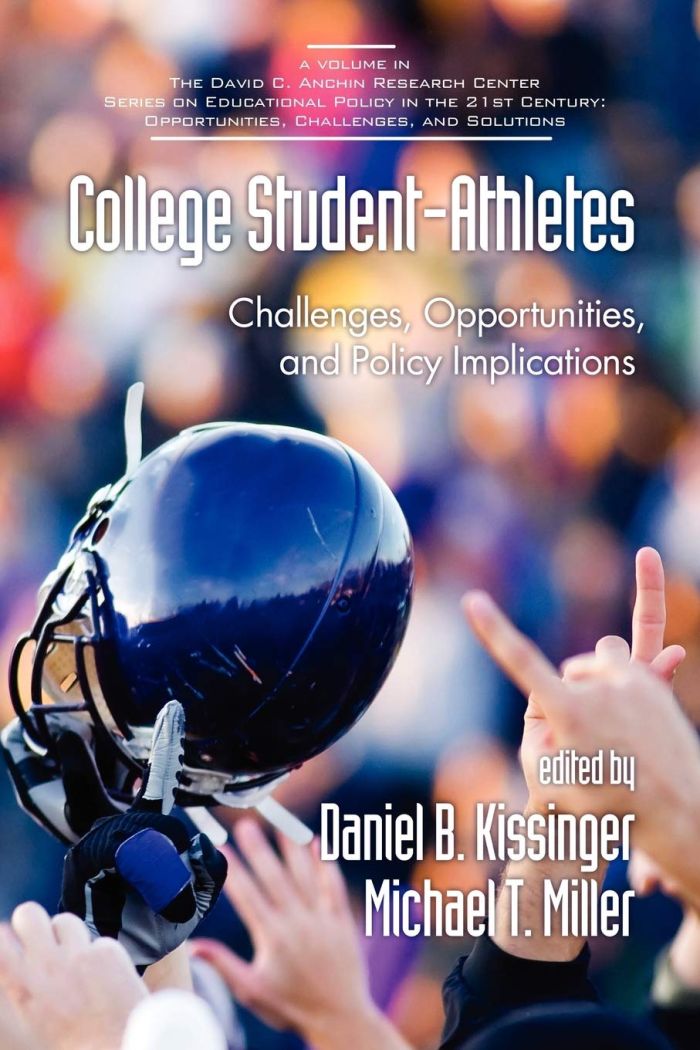
This volume is a critical and objective study of the contemporary college student athlete. Framed around the process of recruitment, transition, and support of student athletes in higher education, the volume is a response to societal pressures to reform college athletics. Driven by publicity and the potential for revenue gains, colleges and universities have invested heavily in developing athletic programs, coaches, and facilities. Yet few resources are invested strategically in the personal and intellectual development of student athletes.
Written by a team of authors with first-hand experience working with student athletes and transitional programs, the volume argues that institutional attention must be directed at caring for the personal and intellectual growth of student athletes. Highlighting some best-practice curricula and exploring the psychological issues surrounding participating in often highly-competitive athletics, the authors consistently conclude that institutional responsibility is of the utmost and immediate importance.
Authors also consider the unique settings of student athletes in community and private liberal arts colleges, demonstrating the broad interest in athletics and institutional competition. The result is an important volume that will be of interest to those who counsel and administer intercollegiate athletic programs, faculty and researchers looking for insightful baseline data on the contemporary student athlete, and those concerned with transitional programs
and the future of higher education.
Series Editor's Introduction: College Student-Athlete: Challenges, Opportunities, and Policy Implications.
- Foreword; Gary M. Miller.
- Chapter 2. The Contemporary College Student Athlete as a Subpopulation; Daniel B. Kissinger and Michael T. Miller.
- Chapter 3. College Student-Athletes: Tracing Historical Research Trends in Higher Education; Darla J. Twale and Karen Abney Korn.
- Part I. Entering the College Environment.
- Chapter 4. Recruitment, Admission, and Retention of First-Year Student-Athletes; Victoria L. Sanders and Henry A. Gardner.
- Chapter 5. The Recruiting Process: The Experiences of Student-Athletes; Paul M. Hewitt.
- Chapter 6. Helping Student-Athletes Adapt to College: The Role of an Academic Transition Course; Judy Stephen and Kristin Higgins.
- Chapter 7. The Cycle of Transition for Student-Athletes to College; Gregory V. Wolcott and Debbie Gore-Mann.
- Part II. Types of Student-Athletes and Their Identities.
- Chapter 8. Promoting Student-Athlete Mental Health: The Role of Campus Counseling Services; Daniel B. Kissinger and Joshua C. Watson.
- Chapter 9. Athletics in Community Colleges: A Primer; V. Barbara Bush, Cindy Castañeda, Stephen G. Katsinas, and David E. Hardy.
- Chapter 10. Private College Student-Athletes: The World of D3 and NAIA; Adam Morris.
- Chapter 11. Female Student-Athletes: Counseling Considerations for a Unique Culture; Richard G. Deaner and Adrian Janit.
- Chapter 12. Body Image and Female Student-Athletes; Jennifer M. Miles.
- Chapter 13. International Student-Athletes; Daniel B. Kissinger.
- Part III. Challenges While Enrolled.
- Chapter 14. College Athletes and Performance-Enhancing Substance Use; Richard E. Newman.
- Chapter 15. Involvement in Learning and Athletic Participation; Ashley Tull.
- Part IV. Institutional Dimensions to Student-Athletes.
- Chapter 16. Accountability to Athletics Stakeholders; Kenneth Borland, Richard D. Howard, Calli Theisen Sanders, and Thomas Gioglio.
- Chapter 17. Policy Implications of College Student-Athletes: More than Campus Discussion; Michael T. Miller and Daniel P. Nadler.