
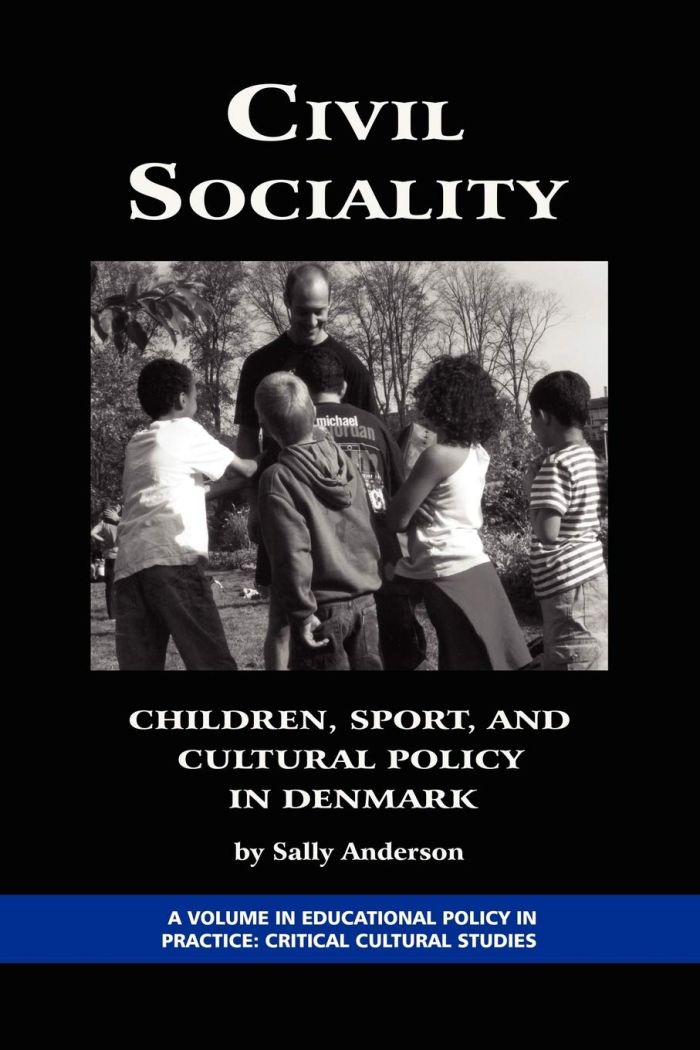
Civil Sociality
Children, Sport, and Cultural Policy in Denmark

This book can be opened with

Note on our eBooks and Audiobooks: you can read our eBooks (ePUB or PDF) and listen to audiobooks on the free Emerald Books app on iOS, Android, and desktop. Or read and listen on Emerald's online reader (ePUB eBooks and audiobooks only). To purchase a digital book you will need to create an account if you don’t already have one. After purchasing you will receive instructions on how to get started.
- Description
- Contents
Sally Anderson's book on sport, cultural policy, and “civil sociality” in Denmark has been a long time in coming, but it's well worth the wait. Based on many years of familiarity with Danish society, and countless hours of intensive fieldwork, Dr. Anderson provides us with a unique anthropological perspective on the process by which state cultural policy actively engages civil society in a quest to shape social relations in the public sphere. The particular domain of policy and social activity is nonschool, voluntary sport, in its various forms. By definition, of course, such activity takes place outside the regular Danish school curriculum, but it is not for this reason any less "educational." Indeed, although it is very broadly attended and institutionalized, perhaps because Danish after-school sport is not compulsory, it is all the more compelling for children and youth, and therefore more powerful in certain ways. Indeed, Dr. Anderson has a signal talent for showing us how afterschool sport in Denmark both transmits and produces social knowledge, and powerfully shapes social relations.
Acknowledgments.
- Series Editor Foreword.
- Preface.
- Chapter 1. Introduction: Tying on Ends.
- Chapter 2. Ludic Fields.
- Chapter 3. Organizing Sports.
- Chapter 4. Incorporating Children.
- Chapter 5. Loose Children.
- Chapter 6. Age Mates and Sport Mates.
- Chapter 7. Room for Everybody.
- Conclusion: A Civilizing Moment.
- Bibliography.
- Index