
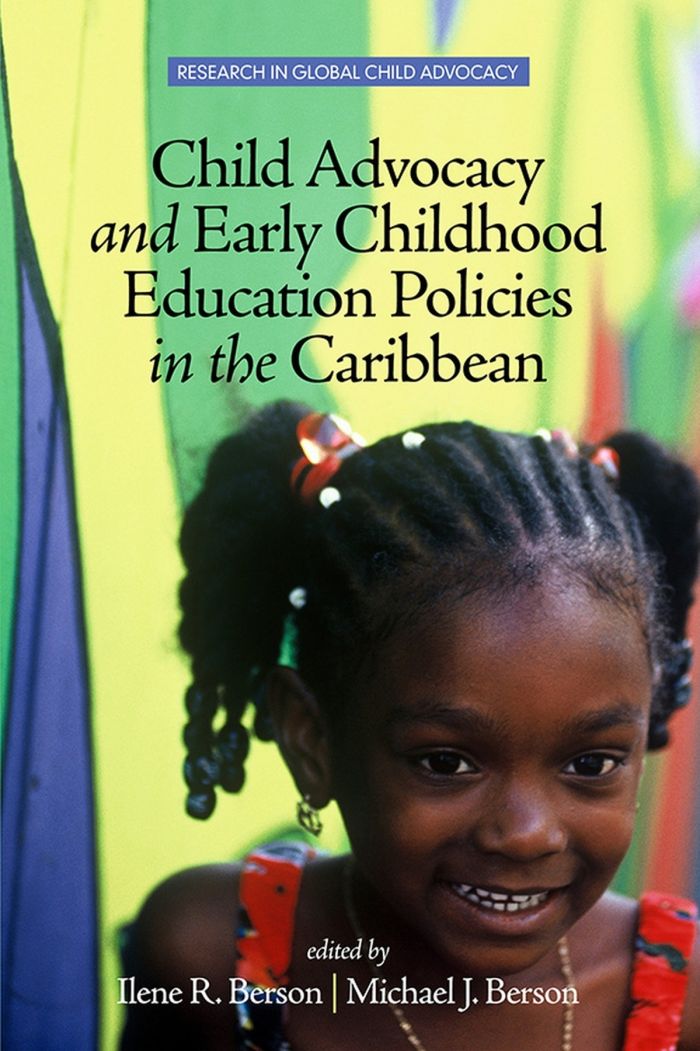
Child Advocacy and Early Childhood Education Policies in the Caribbean

This book can be opened with

Note on our eBooks and Audiobooks: you can read our eBooks (ePUB or PDF) and listen to audiobooks on the free Emerald Books app on iOS, Android, and desktop. Or read and listen on Emerald's online reader (ePUB eBooks and audiobooks only). To purchase a digital book you will need to create an account if you don’t already have one. After purchasing you will receive instructions on how to get started.
- Description
- Contents
This volume explores early childhood education policies and practices in the Caribbean. Early childhood development has gained increasing importance as part of national agendas to achieve social and economic goals. Regional guidelines and action plans have been developed, but progress across nations varies. Chapters in the book analyze child policies and issues, critically examine progress on alignment between policies and practices, and propose recommendations for advocacy and implementation that may advance the early childhood development agenda throughout the Caribbean.
The book includes the perspectives of early childhood practitioners, policymakers, caregivers, representatives from family agencies as well as other key stakeholders in the education of young children. Across these diverse viewpoints is a shared commitment to children’s well being and the necessity of an integrated response that captures the challenges and opportunities of early childhood development services and initiatives that are framed based on contextual relevance and cultural appropriateness. Part One includes chapters that advocate for national policies throughout the Caribbean to support young children. Chapters in Part Two call for quality early childhood programming that is based on the tenets of developmentally appropriate practice. Part Three considers the pedagogical dilemmas that arise in math and literacy when schools negate purposeful and engaging early childhood curriculum. Part Four presents various perspectives on child protection and the necessary infrastructure of policies and practices to ensure cognitive, social, and physical development of young children in the Caribbean. This important resource promotes critical discourse on the current status of children and efforts that have been developed to effectively advocate for the rights of the young.
Acknowledgments.
- Introduction: Development, Care, and Education in the Earliest Years of Life: Past, Present, and Lessons for the Majority World, Kofi Marfo, Ilene R. Berson and Michael J. Berson.
- Part I: Advocating For National Policies To Support Young Children.
- Chapter 1. Toward Cross-Sector Integration of Early Childhood Services in St. Lucia: Using Policy, Historical, and Linguistic Factors to Inform Future Progress, Patriann Smith and Kofi Marfo.
- Chapter 2. Quality in Early Childhood Education: The Puerto Rico Experience, Annette López de Méndez, Víctor E. Bonilla-Rodríguez and Claudia X. Alvarez-Romero.
- Chapter 3. A Move Toward Completing the Early Childhood Development Policy in Belize, Alberto Luis August.
- Part II: Advocating For Developmentally Appropriate Practice.
- Chapter 4. From Bull in the Pen to One, Two, Three, and Then? Transitioning From Outdoor Play to Indoor Activities, Carol Long.
- Chapter 5. When Heavy Desks Do Not Move, Move the Way to Think About Desks, Trician Bailey and Megan Cross.
- Chapter 6. Voices from Parents: Issues of Early Childhood Education in Belize, Erin M. Casey.
- Part III: Advocating For Purposeful And Engaging Early Childhood Curriculum.
- Chapter 7. A Postcolonial Waltz: Encouraging Meaningful Mathematics Learning in Jamaica's Early Childhood Classrooms, La-Toya Latty and Lissa Ledbetter.
- Chapter 8. Boys Won't Read: What Can Teachers Do to Engage Boys in Reading? Sharon Edwards and Lori Rakes.
- Part IV: Advocating For Child Protection And Children's Well Being.
- Chapter 9. Developing the Ideal Caribbean Child: Employing Social-Emotional and Behavioral Assessment and Intervention Practices in Health and Family Life Education, Tavis D. Jules and Gina Coffee.
- Chapter 10. Children at Risk: Girls' Sexual Abuse and Child Protection Issues in Jamaica, Paul Miller.
- About the Contributors.