
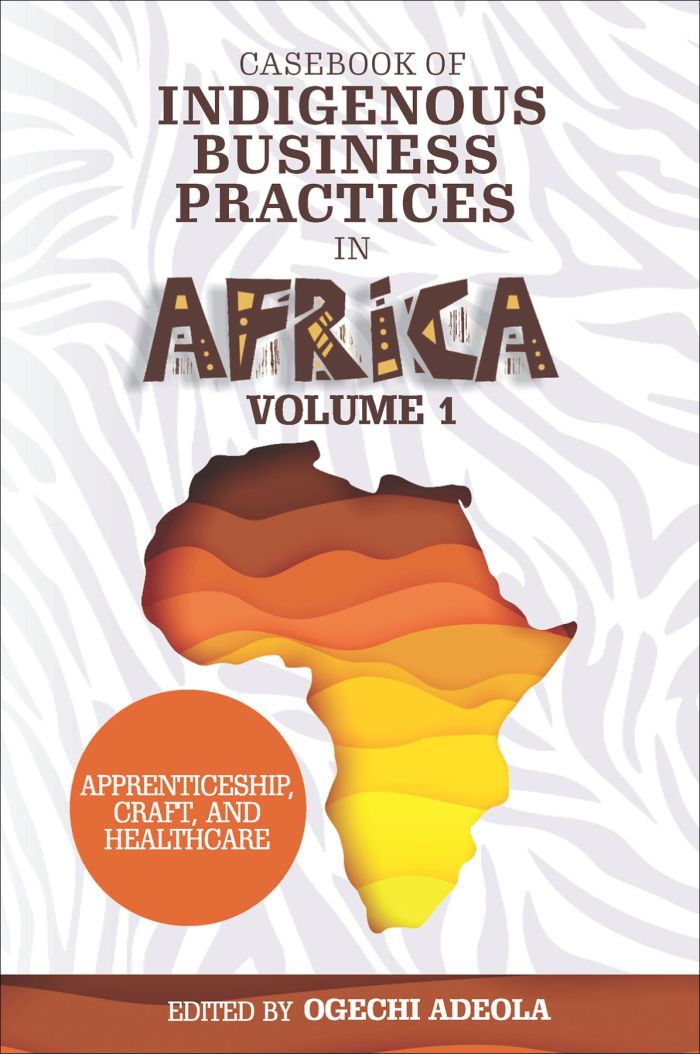

Casebook of Indigenous Business Practices in Africa
Apprenticeship, Craft, and Healthcare - Volume 1

This book can be opened with

Note on our eBooks and Audiobooks: you can read our eBooks (ePUB or PDF) and listen to audiobooks on the free Emerald Books app on iOS, Android, and desktop. Or read and listen on Emerald's online reader (ePUB eBooks and audiobooks only). To purchase a digital book you will need to create an account if you don’t already have one. After purchasing you will receive instructions on how to get started.
- Description
- Contents
- Reviews
- About
Africa’s unique and diverse culture, embedded in age-long business practices, presents an interesting proposition for advancing indigenous knowledge and building sustainable structures. Casebook of Indigenous Business Practices in Africa is a collection of case studies across Northern, Eastern, Central, Western and Southern parts of Africa. Indigenous enterprises contribute to the economic prosperity of Africa and are an essential part of the continent’s business ecosystem. Contributing authors to this two-volume edited work explore the inherent potential of indigenous practices in bolstering business performance and stimulating social and economic development. This first volume focuses on Apprenticeship, Craft, and Healthcare, while the second volume considers Trade, Production and Financial Services, in featured African countries.
Indigenous business practices hold great prospects for economic advancement in Africa, despite the dominance of Western business methods, which, although beneficial, are yet to drive the continent’s developmental agenda. By identifying and exploring the unique features of these practices, multiple actors, including entrepreneurs, policymakers, students, educators, and practitioners, are provided with context-based information that can foster social and economic empowerment across the continent.
The book extends the frontier of knowledge on the role of cultural orientation, values, and traditions in achieving a more prosperous Africa through the development of indigenous business knowledge.
Chapter 1. Introduction: A Casebook of Indigenous Business Practices in Africa; Ogechi Adeola
- PART I. Apprenticeship Models and Practices
- Chapter 2. Exploration of Apprenticeship and Business Succession Models in Nigeria, Ghana and the Benin Republic: A Cross-Case Analysis of Selected Ethnic Groups; >Chioma Ifeanyichukwu, King Carl Tornam Duho, and Carine Charlie Senan Bonou
- Chapter 3. Apprentice training, Mastership and Managerial Development of the Igbo Entrepreneurs in Nigeria; Ngozi Ann Chikere
- Chapter 4. Case Studies on Business Ethics and Values: Insights from the Southeastern Igbos of Nigeria; Prisca Chidiogor Ezekafor, Uchenna David Nwoye, Ogechi Adeola, and Isaiah Adisa
- PART II. Indigenous Craft Enterprises
- Chapter 5. The Cultural and Creative Industries in Ethiopia: A Case of Cultural Lifestyle Items Producer; Konjit Hailu Gudeta and Atsede Tesfaye Hailemariam
- Chapter 6. Market Revival and Sustainability: Lessons for Business Actors from the Case of Kiliim Social Enterprise, Egypt; Ashraf Sheta, Nourhan Abdel Azim, and Isaiah Adisa
- Chapter 7. An Examination of Indigenous Business Incubators: A Case of Kente Weaving Industry in Ghana; Majeed Mohammed and John Paul Kosiba
- Chapter 8. Cultural and Socioeconomic Impact of the Indigenous Garment Industry: A Case of Smock Dealership in Tamale, Ghana; Majeed Mohammed, Oserere Ibelegbu, Joana Akweley Zanu, Ahmed Tijani, and Seidu Alhassan
- PART III. Healthcare
- Chapter 9. Placing Indigenous Knowledge at the Core of Production and Marketing of Medicinal Plant (mpesu) in Zimbabwe and South Africa; Amaechi Kingsley Ekene,Kugara Stewart Lee, Mdhluli Tsetselelani Decide, and Tsoaledi Daniel Thobejane
- Chapter 10. Indigenous African Healing Practices as a Resource for Entrepreneurial Promotion: Insights from Tsonga Traditional Healthcare System in South Africa; Kugara Stewart Lee, Mdhluli Tsetselelani Decide, Mokgoatšana Sekgothe, and Amaechi Kingsley Ekene
- Chapter 11. Herbal Medicine Trade during Covid-19 in Africa: A Narrative of Herbal Medicine Producers in Southwestern Nigeria; Isaiah Adisa, Emmanuel Ogbu, and Chiebuka Uzoebe Prince
- PART IV. Conclusions and Recommendations
- Chapter 12. The Somali Business Orientation: Key Lessons and Recommendations for Africa from the Kenyan Somali practice; Abel Kinoti Meru, Beatrice Matiri – Maisori and Mary Wanjiru Njoroge – Kinoti
- Chapter 13. Advancing Indigenous Knowledge and Building Sustainable Business Structures in Africa; Ogechi Adeola
This unique collection of case studies across multiple sectors and regions in Africa presents a compelling resource for the advancement of indigenous knowledge and business practices on the continent. It provides an invaluable Africa context-specific resource to inform knowledge development about African businesses, ensure socio-economic advancement, preserve cultural heritage, achieve sustainability and enhance business decision-making in the continent.
Ogechi Adeola is a Professor of Marketing at Lagos Business School, Pan-Atlantic University, Nigeria. In addition, she serves as a member of the Governing Board of University of Kigali, Rwanda. Her multi-dimensional research focuses on advancing knowledge across the intersection of marketing, entrepreneurship, tourism, and gender. She is the editor of the book, Indigenous African Enterprise: The Igbo Traditional Business School (I-TBS), published in 2021 by Emerald Publishing Limited.