
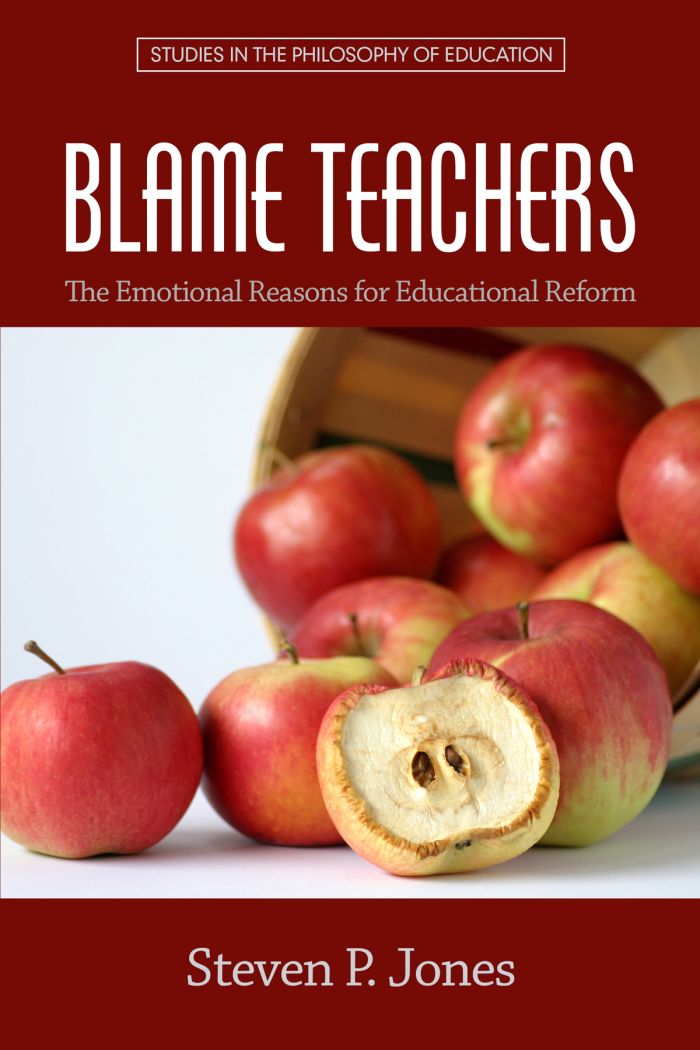

Blame Teachers
The Emotional Reasons for Educational Reform

This book can be opened with

Note on our eBooks and Audiobooks: you can read our eBooks (ePUB or PDF) and listen to audiobooks on the free Emerald Books app on iOS, Android, and desktop. Or read and listen on Emerald's online reader (ePUB eBooks and audiobooks only). To purchase a digital book you will need to create an account if you don’t already have one. After purchasing you will receive instructions on how to get started.
- Description
- Contents
There is a story going around about the public schools and the people who teach in them—a story about how awful our nation’s teachers are and why we should blame teachers for the poor state of our public schools. But is the story about teachers right or fair? Why do so many people point fingers at teachers and seem to resent them so much?
Blame Teachers: The Emotional Reasons for Educational Reform examines why many people blame teachers for what they understand to be the poor state of our schools. Blame comes easily to many people when they read about poor student performance and how “protected” teachers are by teachers’ unions and tenure policies. And with blame comes resentment, and with resentment comes demands for all kinds of educational reform—calls for more standardized testing, merit pay, charter schools, and all the rest. And we expect teachers to like and accept all the reforms being proposed.
Conceiving educational reform out of blame and resentment aimed at teachers does no good for teachers, students, or schools. Blame Teachers outlines many of the strange and unacceptable assumptions about teaching and the purposes of education contained in these educational reforms. Intended for teachers, teacher education students, policymakers and the larger public, Blame Teachers suggests much better and more productive conversations we can have with teachers—conversations much more likely to improve teaching and learning in classrooms. The book argues for conversations with teachers that don’t begin or end with blame and resentment.
Chapter 1. Justifying Reforms and Changes to the Teaching Profession.
- Chapter 2. Blame and Resentment.
- Chapter 3. Blame, by Any Other Name.
- Chapter 4. Those Who Can't, Teach.
- Chapter 5. Standards, Accountability, and the Value of Learning.
- Chapter 6. Teachers: Guilty as Charged.
- Chapter 7. Giving Students Good Reasons to Learn.
- Chapter 8. Don't Blame Teachers