
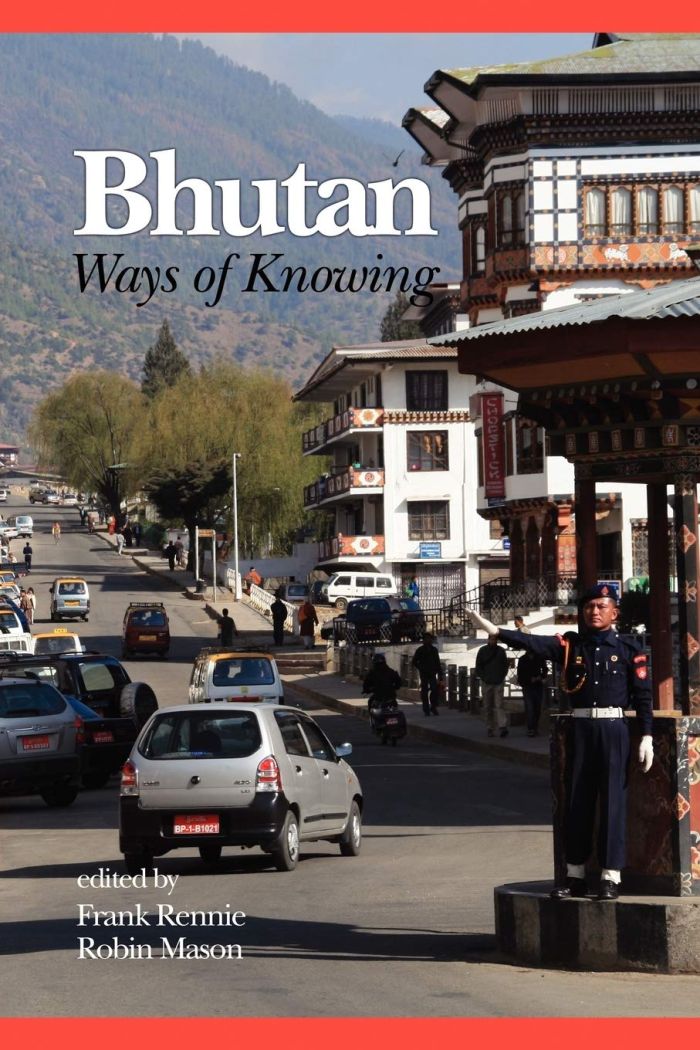
Bhutan
Ways of Knowing

Emerald
This book can be opened with

Note on our eBooks and Audiobooks: you can read our eBooks (ePUB or PDF) and listen to audiobooks on the free Emerald Books app on iOS, Android, and desktop. Or read and listen on Emerald's online reader (ePUB eBooks and audiobooks only). To purchase a digital book you will need to create an account if you don’t already have one. After purchasing you will receive instructions on how to get started.
- Description
- Contents
There is a misty-eyed vision of Bhutan which has popularized it as ‘the last Shangri-la’, the hidden Himalayan jewel, the travel destination of celebrities and unique-experience-hunters. We are not entirely comfortable with this image. Bhutan has undoubtedly become the focus of considerable media attention in the last few years. Articles appear regularly on its substitution of happiness for money as the indicator of the country’s wealth. Television programs, books, visits by personalities – all have served to bring Bhutan to global awareness. This attention only serves to increase pressure on the culture to become like any other. How has Bhutan resisted the impact of globalisation which has had such a homogenizing affect on most other countries in the world?
A practice, until recently, of self-imposed isolation from the rest of the world, the Buddhist tradition, and the lack of any successful foreign invader have combined to produce a living culture that is as unique as it is fragile. This fragility suggested the need to document a context that seemed on the verge of change. Our second visit in 2008 confirmed our sense of immanent change, as we could see for ourselves the ways in which ‘international culture’ was beginning to appear: the first escalator in the country, widening the main road from single track to dual carriageway, the first democratic election, the availability of satellite television, and internet expansion... Nevertheless, we continue to feel that in Bhutan there is a different ‘way of knowing.’ We have worked with staff at the University to try to capture something of this in three different forms:
• chapters written by Bhutanese individuals about the culture, landscape, education and folklore
• extracts from interviews with university staff and associates to draw out particular characteristics of Bhutan which would be of interest to Western readers
• photographs of Bhutan which provide a different ‘view’ of the country to complement the text.
The subject matter has been chosen by Bhutanese staff at the Royal University of Bhutan as an expression of their understanding of their own land. There are conventional travel books about Bhutan available and we have not attempted to contribute to this literature. Bhutan: Ways of Knowing is a book which reflects Bhutanese understanding of their country. We hope that you will find these contributions as interesting and thought-provoking as we do, and that you, too, will find a different way of knowing about Bhutan.
Foreword; Dasho Pema Thinley
- Introduction
- Section I. Education
- Chapter 1. Learning to Know, In Bhutan; Frank Rennie
- Chapter 2. A Bhutanese Learning Abroad; Yangka
- Chapter 3. A Window on Bhutan; Dawa Lhamo and Diki Wangmo
- Chapter 4. The Monastic Education; Jagar Dorji
- Chapter 5. My Mother and My Daughter; Tulsi Gurung
- Chapter 6. Shared Metaphors, Shared Dreams; Kunzang Choden
- Chapter 7. Going to Iskoori; Jagar Dorji
- Section II. Folklore
- Chapter 8. Living with Folklore; Frank Rennie
- Chapter 9. Culture and Bhutan; Dasho Sangay Wangchuk
- Chapter 10. Festivals; Dorje Tshering
- Chapter 11. The Power of Bhutanese Folk Literature; Dorji Thinley
- Chapter 12. The Metaphorical World of Archery; Karna Pedey
- Chapter 13. The Bhutanese Menu; Dawa Lhamo
- Chapter 14. The Significance of Rimdro in Bhutan; Singye Namgyel
- Chapter 15. Living by Traditions; Jagar Dorji
- Chapter 16. Superstition; Kezang Sherab and Kinzing Lhendup
- Chapter 17. The Marriage System in Lower Kheng; Dr. Penjor
- Section III. Landscape
- Chapter 18. Being in the Landscape of Bhutan; Frank Rennie
- Chapter 19. Traditional Medicine; Leki Wangchuk
- Chapter 20. Farming Practices; Phub Dorji
- Chapter 21. Place Names and Their Meaning; Jagar Dorji
- Chapter 22. Chortens; Dawa Lhamo
- Chapter 23. Punakha Dzong; Karma Gayleg
- Chapter 24. Organic Farming in Bhutan; Tulsi Gurung
- Chapter 25. Birds of Bhutan: The Significance, Status and Conservation; Tshering Dorji
- Chapter 26. Food Crops of Bhutan; Karma Lhendup
- Section IV. Culture
- Chapter 27. A Society in Change; Frank Rennie
- Chapter 28. Literature in Bhutan; Kunsang Choden
- Chapter 29. Information Technology and Bhutan; Tenxin Choeda
- Chapter 30. A Cross Cultural Comparison; R. Balamurugan and Sonam Tobgay
- Chapter 31. No Longer the Ploughman’s Song; Dorji Thinley
- Chapter 32. Gha-key (Happiness), Gandhi, and Buddhism; Tshering Dorji
- Chapter 33. New Arrivals; Manikala Laygoi
- Chapter 34. Beautiful Experiences; Rekha Chhetri
- List of Authors
- List of Interviewees