
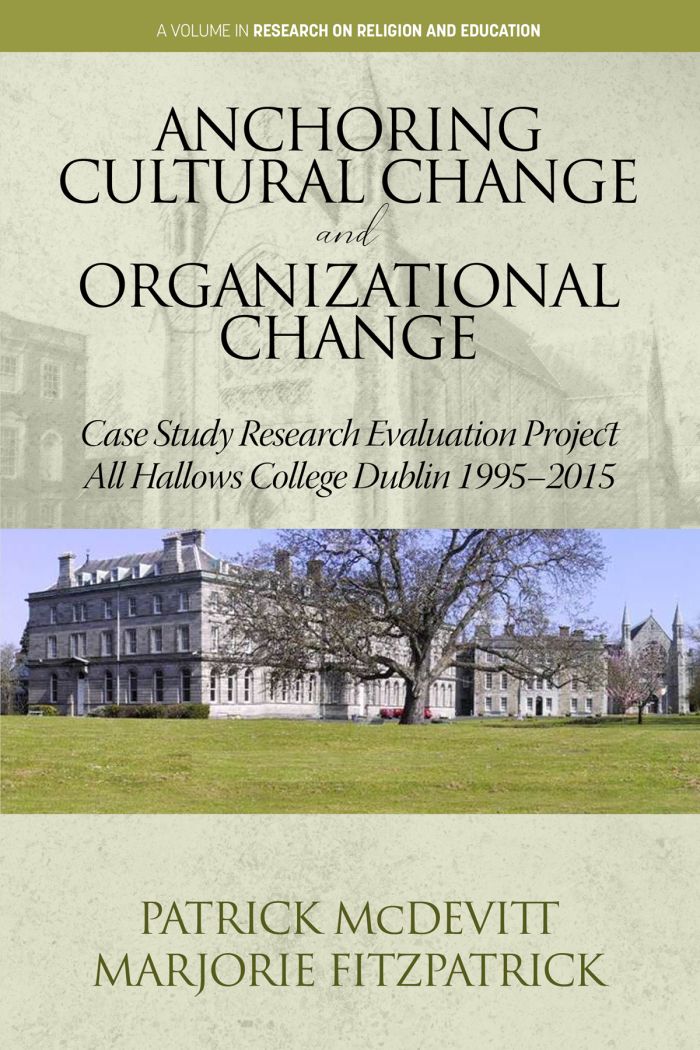
Anchoring Cultural Change and Organizational Change
Case Study Research Evaluation Project All Hallows College Dublin 1995-2015

This book can be opened with

Note on our eBooks and Audiobooks: you can read our eBooks (ePUB or PDF) and listen to audiobooks on the free Emerald Books app on iOS, Android, and desktop. Or read and listen on Emerald's online reader (ePUB eBooks and audiobooks only). To purchase a digital book you will need to create an account if you don’t already have one. After purchasing you will receive instructions on how to get started.
- Description
- Contents
This book describes the organizational processes and changes coupled with leadership changes over three distinct eras from 1995-2015. It illustrates the challenges the college faced, and the actions taken to resolve issues and make changes. The successes, and the barriers encountered as the organization worked toward solutions to the many interrelated and confounding social and financial issues with which the college was facing, are also described.
In the book, John Kotter’s Steps of Organizational change and culture is the theoretical context in the analysis of data. Kotter stresses the point that in Organizational change the “Culture” must be anchored in order for change to take place successfully. Kotter understands “Culture” as the Organization’s Identity and the Organization’s attitude for “Change”. The concept of “Culture” also includes how “Identity” and “Change” interrelate to one another. Unfortunately, this “anchoring of culture” does not often happen in many organizations which leads to failure and the dying of Organizations. In general, Kotter’s theory is typically used in for-profit organizations, whereas the All Hallows’ study applies Kotter’s theory to a faith-based and non-profit organization. Although All Hallows enjoyed 172 years of educational contributions, the book will illustrate how legacy challenges, sense of complacency, lack of vision and mission identity at critical times of change failed to inculcate and anchor an Organizational Culture and Identity for Change.
Abstract.
- Introduction.
- Acknowledgments.
- Chapter 1. Historical Context.
- Chapter 2. Review of Literature.
- Chapter 3. Theoretical Focus: John P. Kotter's Eight Steps.
- Chapter 4. Identity, Mission, and Organizational and Cultural Change.
- Chapter 5. Ethical Leadership and Organizational and Cultural Change.
- Chapter 6. Social Justice and Organizational and Cultural Change.
- Chapter 7. Internal and External Challenges and Organizational and Cultural Change.
- Chapter 8. Conclusions and Recommendations.
- References.