
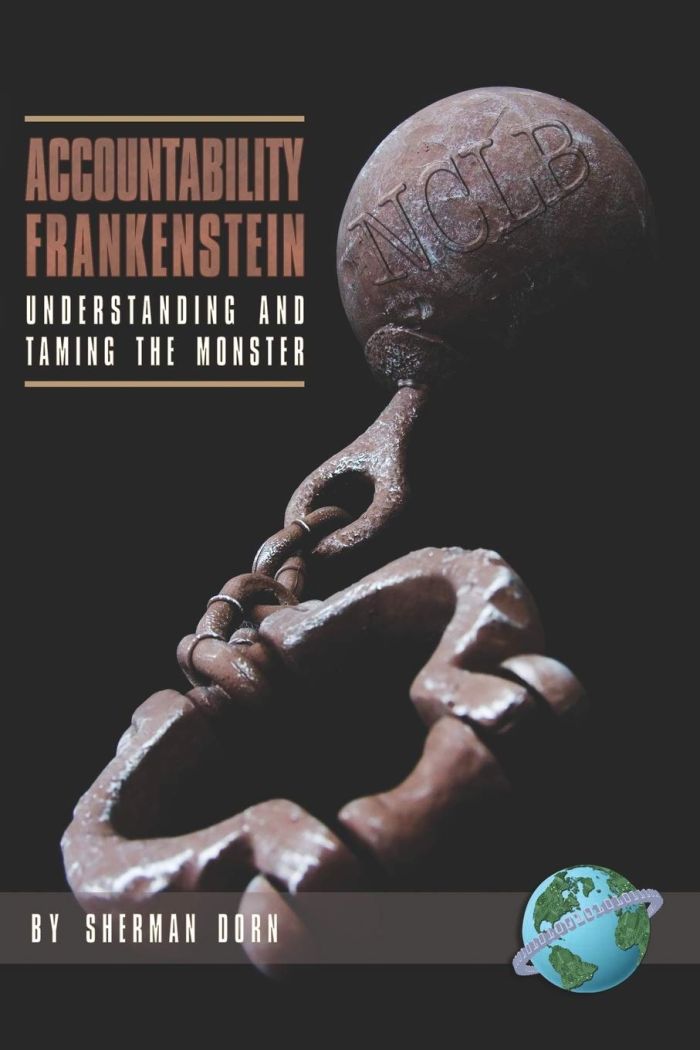
Accountability Frankenstein
Understanding and Taming the Monster

This book can be opened with

Note on our eBooks and Audiobooks: you can read our eBooks (ePUB or PDF) and listen to audiobooks on the free Emerald Books app on iOS, Android, and desktop. Or read and listen on Emerald's online reader (ePUB eBooks and audiobooks only). To purchase a digital book you will need to create an account if you don’t already have one. After purchasing you will receive instructions on how to get started.
- Description
- Contents
To understand the current moment in school accountability, one must understand the larger contradictions in education politics. Accountability Frankenstein provides a broader perspective on the school accountability debate by exploring the contradictions inherent in high-stakes testing. Accountability Frankenstein explains the historical and social origins of test-based accountability: the political roots of accountability, why we trust test scores while we distrust teachers, the assumptions behind formulaic accountability systems, and the weaknesses with the current carrot-and-stick approach to motivating teachers.
Accountability Frankenstein answers the questions of educators and parents who want to understand the origins of accountability. This book challenges the beliefs of fierce advocates and opponents of highstakes testing. It provides a rescue plan for accountability after the failures of high-stakes testing, a plan to make accountability smart, democratic, and real.
Acknowledgments.
- Preface.
- Chapter 1. The Political Origins of Accountability.
- Chapter 2. Trusting Tests.
- Chapter 3. How Trustworthy Are Test Scores.
- Chapter 4. Setting Up Goals and Failure.
- Chapter 5. Consequential Thinking.
- Chapter 6. A Better Way.
- References.